It is part of the history of photography as a medium of modernity that it must repeatedly be supplemented by names and works that the light of public attention has not yet reached. Above all, the talents of women were often overlooked. Yet as early as the 1920s the camera became their preferred instrument, with which women conquered their own view of the world. This must also have been the case for Annette Beiger, born in Strasbourg in 1906, who met the doctor and photographer Dr Paul Wolff there in 1919. In 1920 she owned her first camera. Paul Wolff became one of the most successful photographers of his time and in 1926, with the Neues Frankfurt, documented the housing projects of the architect Ernst May. In 1927 he founded the agency Dr. Paul Wolff und Tritschler in Frankfurt with his colleague Alfred Tritschler. Annette Beiger first worked there in the archive, later assisted Wolff and often acted as a model in his photo reportages. The two married in 1939 and separated ten years later. Annette Wolff returned to her home town of Strasbourg. After Paul Wolff’s death in 1951 she administered his estate. She then built up a career as a freelance photographer, working for magazines, museums, fashion magazines and the agency Mainbild.
A master of genres
By this time she already commanded the craft with great assurance. The title of her exhibition of works from the 1930s at the Forum für Fotografie Köln is “Ich war immer dabei” (“I was always there”); it was found as a handwritten note on the back of a photograph. Annette Wolff was indeed not only part of the team on many commissions but also took photographs herself for Wolff and Tritschler’s agency. The usual practice in those years, however, was for employees’ work to be published under the agency’s name. This happened to Annette Wolff’s pictures too. Her self-image would not accept it, though, and so she crossed out the agency stamp on the back of the prints and replaced it with the signature Annette Wolff.
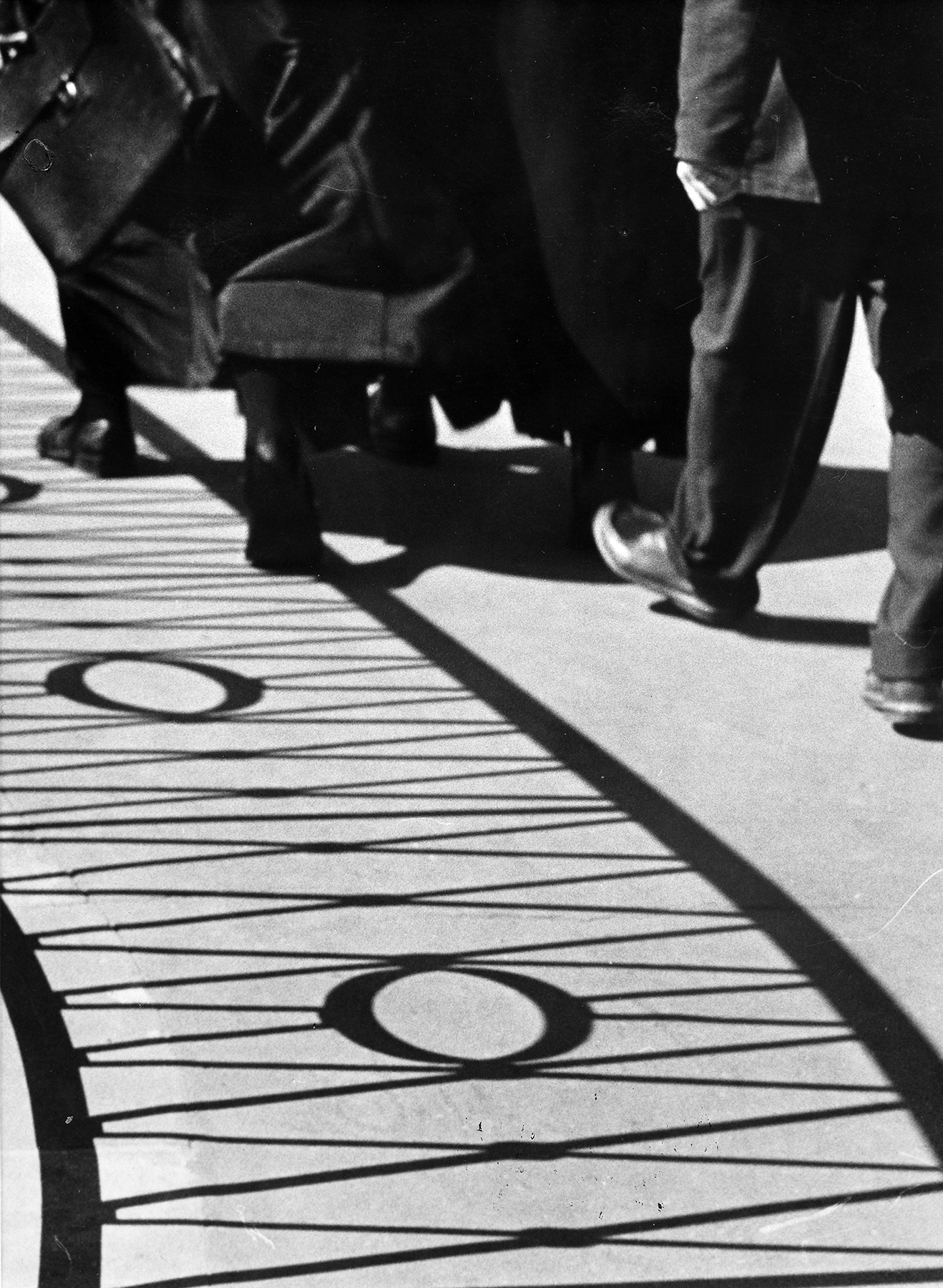
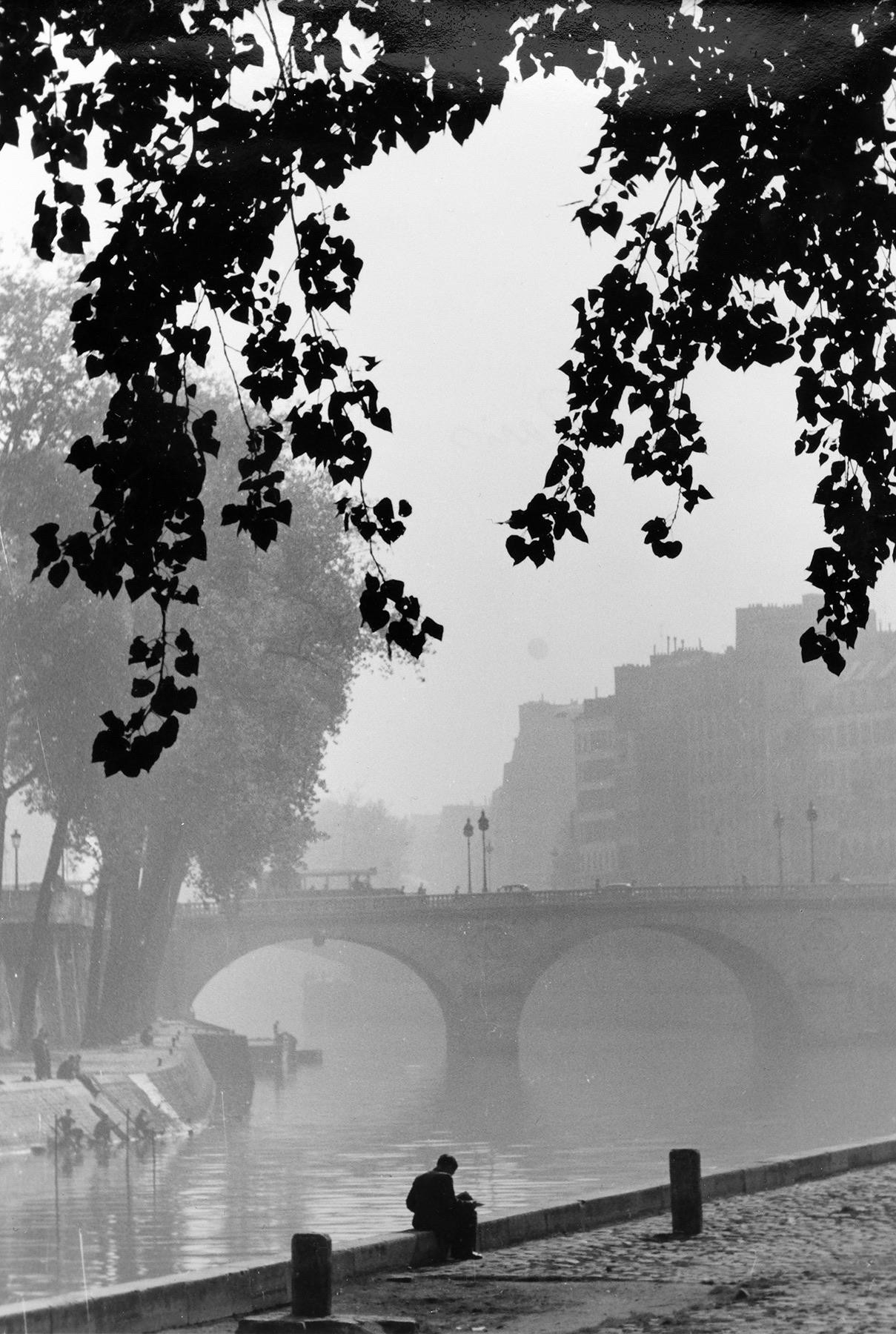
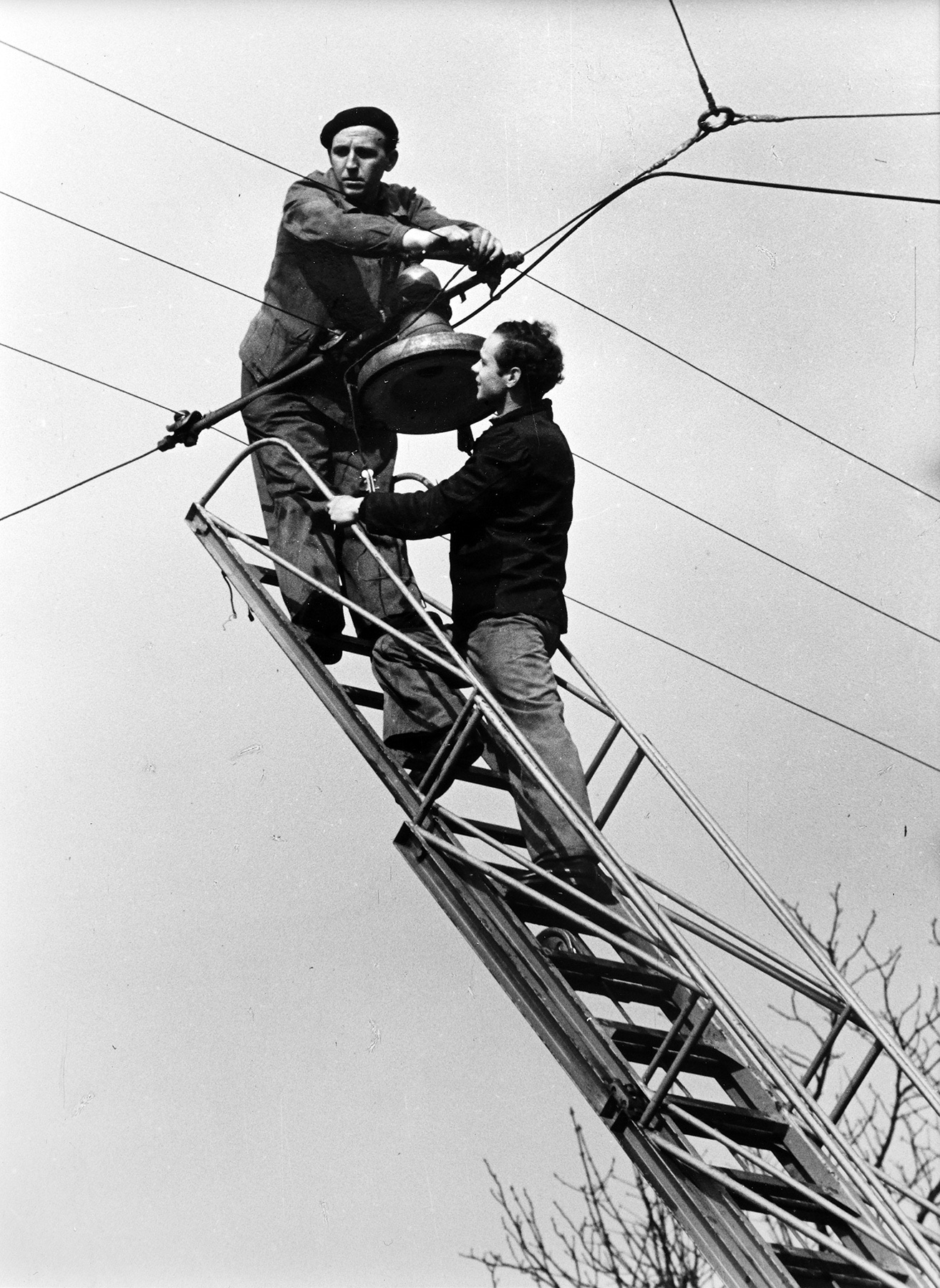
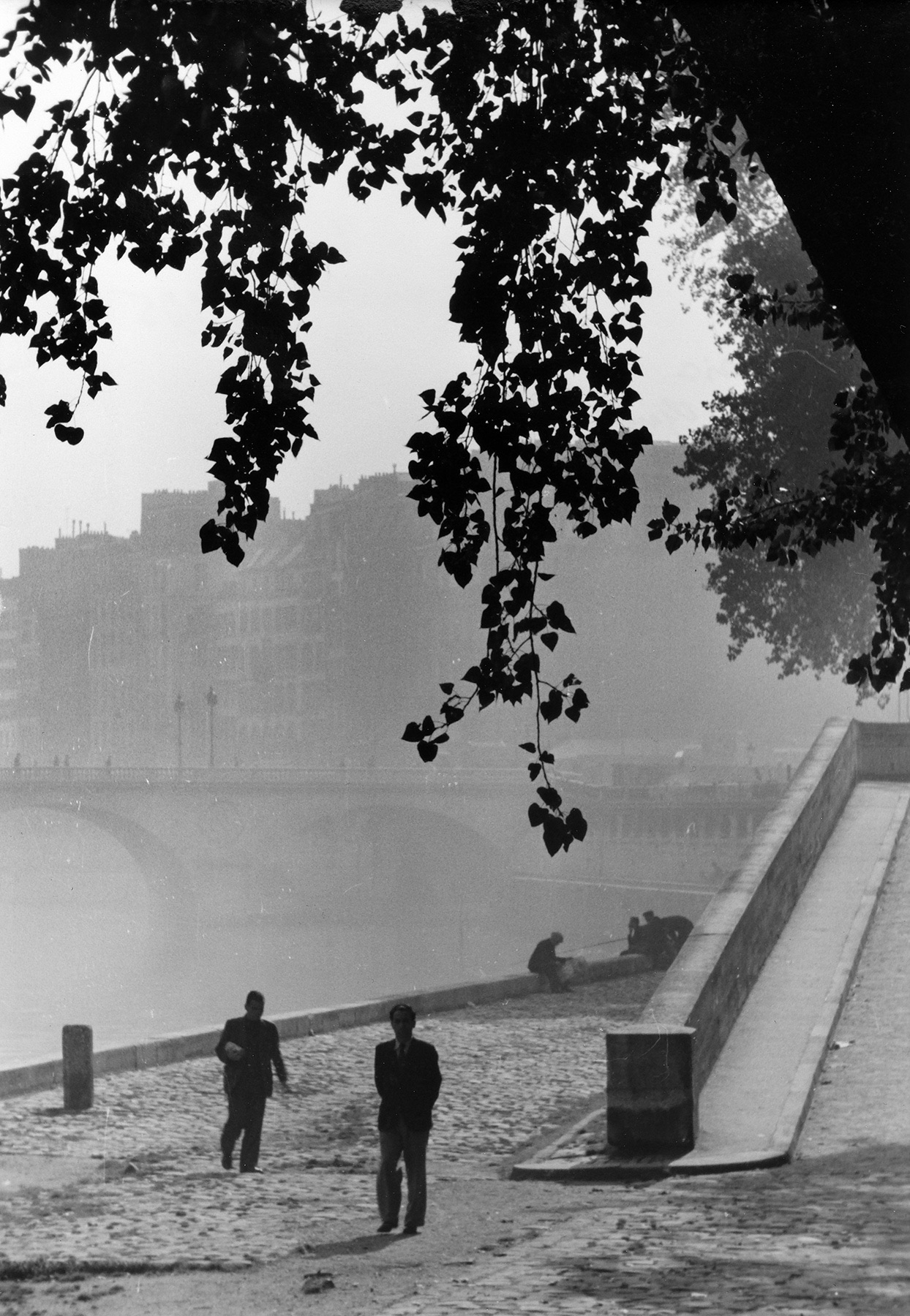
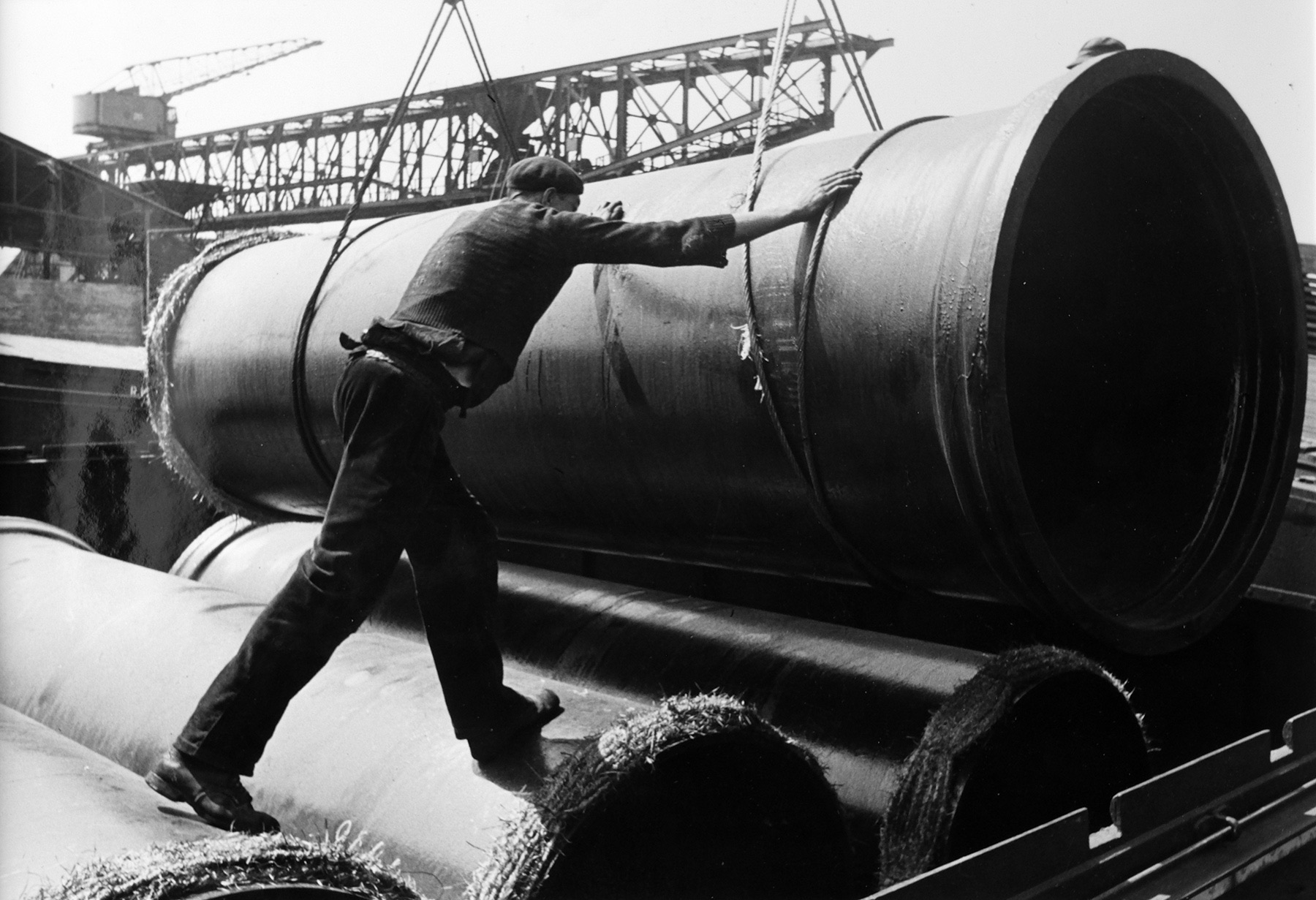
That Annette Wolff – who died in Saumur on the Loire in 2002 at the age of 96 – was a great photographer is proven not only by her craftsmanship, with which she set visual accents in her compositions and knew how to shape space in a subtle dialogue between foreground and background. She mastered the most varied genres and subjects, from portraiture to fashion, industry, architecture, photo reportage and street photography. The key to her work seems to lie in her unerring sense of space. She was able to gauge the depth – and with it the promise – that a space holds just as well as she could capture the tactile appeal of surfaces and ornaments. The idea behind an architectural design thus becomes immediately comprehensible to the viewer in the picture. She had a special talent for making even seemingly unattractive subjects interesting. She proves this in her photo reportages from the world of industry, in which she was able to play out the sensual potential of the different materials visually. She shows, for example, a worker loading large metal pipes. To the extent that his body adapts to the forms of the material, movement arises in the picture. This aesthetic understanding of the working world lends the people in it a special dignity.
An eye for the gesture
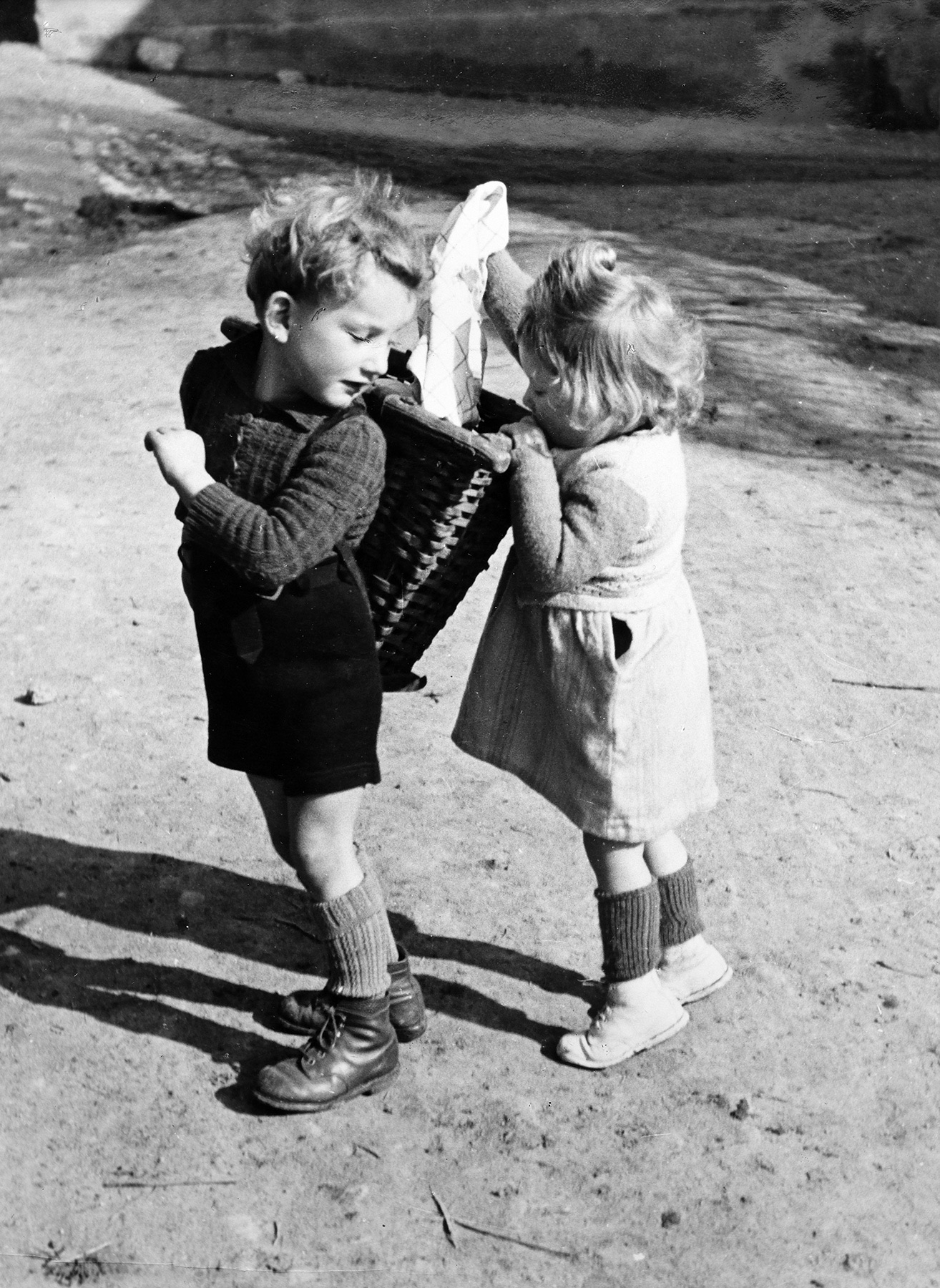
The interplay of closeness and distance unfolds with particular virtuosity in her photo reportages. Whether at a house being built or at the grape harvest, the camera’s gaze sometimes captures in detail the work of the hands and then shows us the whole setting in which the actions take place. In this way Annette Wolff captures an entire milieu. It expresses a deep interest in the world that also includes people. Her particular mastery as a photographer shows itself in this way of seeing. She sees, for example, a little boy with a basket on his back from which a girl of the same age, with his consent, pulls a cloth. The message of the picture lies in the trust that connects the children as they play together. This finds expression in the gesture. Gestures are inherent to people; with them they tell of themselves. Photographers have to anticipate situations in which gestures occur – that requires photographic empathy.
Friendliness as a principle
Annette Wolff undoubtedly possessed it. Her French roots alone may point to this. In France, Willy Ronis, Sabine Weiss and Robert Doisneau formed a circle of colleagues who mastered the narrative element of humanist photography in a unique way. Annette Wolff’s photographs, too, speak of a friendliness to which humour is indispensable. She shows it where she addresses the male gaze. In a beach scene, for example, Wolff shows two young women in bathing costumes strolling along the sea, watched by two men who cannot take their eyes off them. Caught, one is tempted to say. The object here is not the women but the watching men, at whom Annette Wolff directs her camera’s lens, thereby setting the dramaturgy of the picture. She did not miss the vulnerability of men, which came to the fore precisely where they tried to strike heroic poses. At the swimming pool Annette Wolff photographs a row of boys presenting themselves, shivering, at the diving tower. In a moment they will leap from the board with a grand gesture, but for now they are still a row of slender bodies who have yet to become heroes.
Annette Wolff’s eye for women and their self-presentation is more intimate still. She observes them at afternoon tea and shows us how they create an aura around themselves through gesture. Hands play an important role here. The iconography of painting presents hands as messengers of thought. Annette Wolff shows them with palms open upwards, sending out an erotic signal with subtle languor. Index and middle finger hold a cigarette whose smoke curls upwards. The cigarette is brought into play here not as a triumphant but as an elegant symbol of emancipation. It is this lightness with which Annette Wolff was able to wrest a fine, sensual joy of life from a difficult time.