
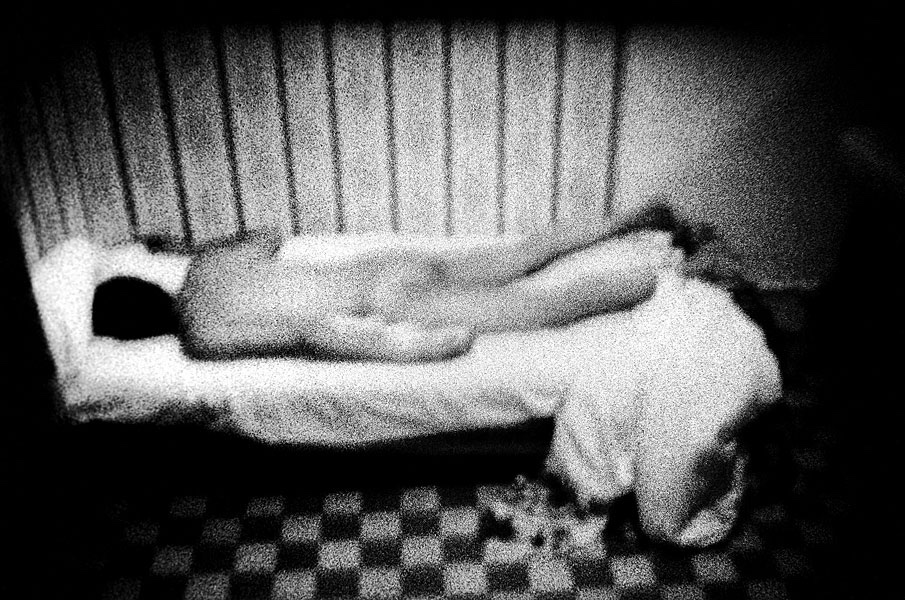
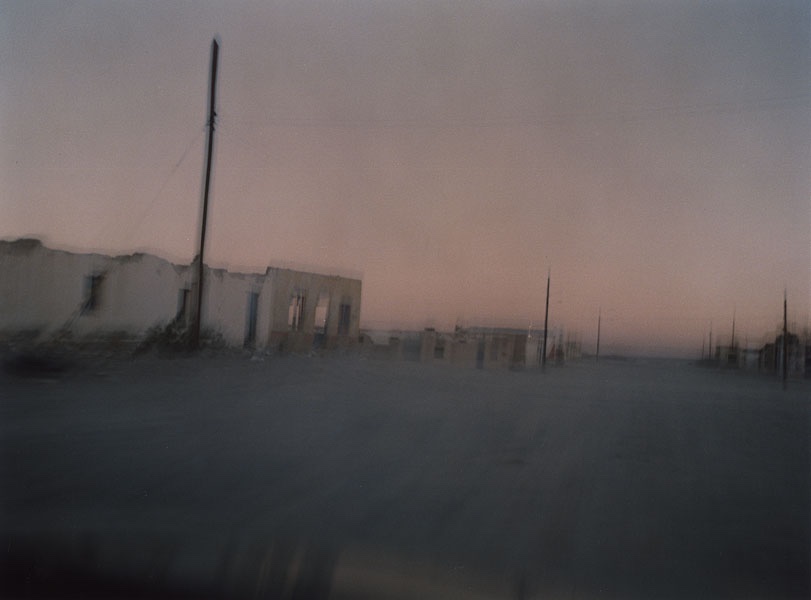
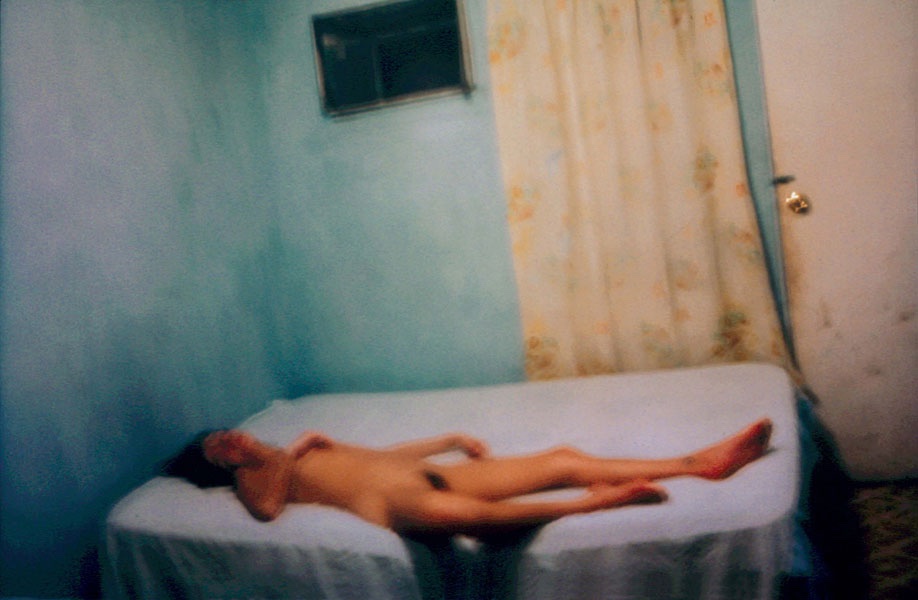
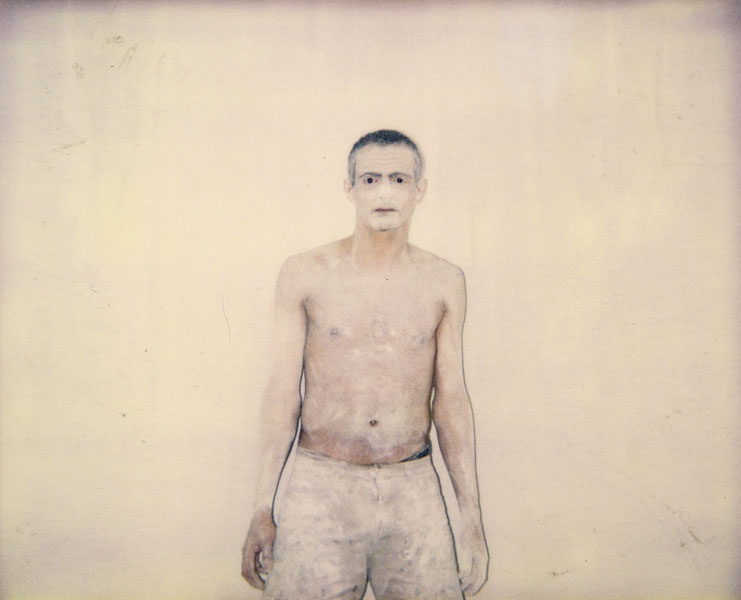
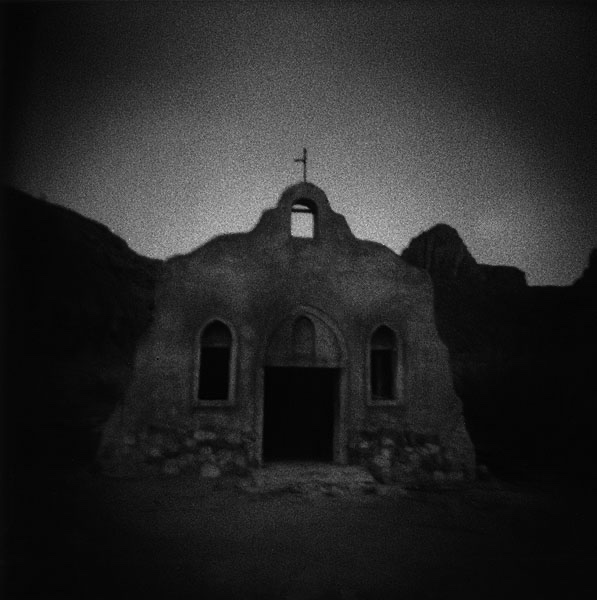
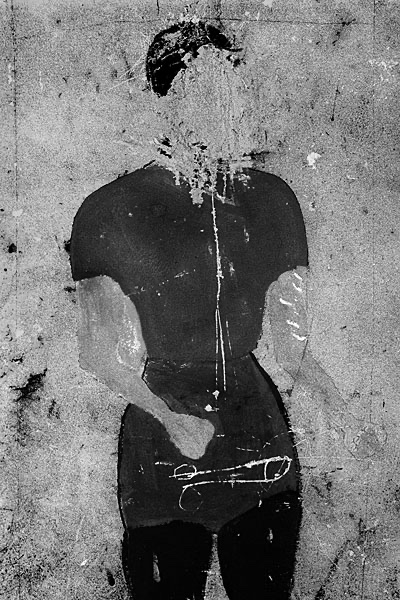
Antoine d’Agata (b. 1961) does not try to depict the world but to communicate his place in it. His photographs drag us into the chaos and tumult of his nights: shabby brothels, visions shattered by alcohol and drugs, faces distorted by light and movement, swaying shots, colliding times, a drifting without purpose or goal. Determined to give up the way of life that produced his “malas noches”, d’Agata now draws an artistic line under it: in an excessive gesture he reconstructs the chaotic world through which he wandered for ten years.
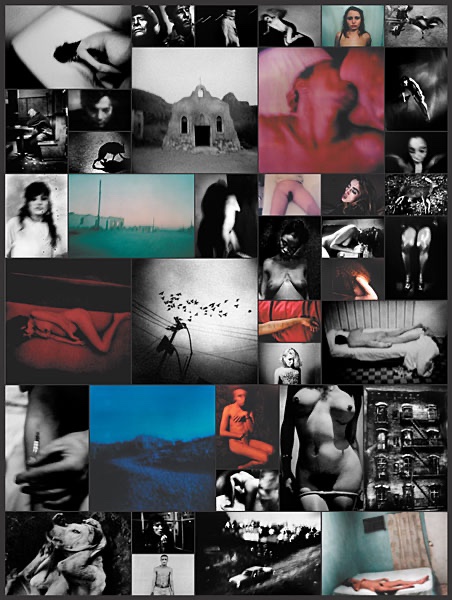
He installs 1001 of his photographs close together in room-filling tableaux – a suggestive panorama full of poetry, eroticism, loneliness, nostalgia and brutal despair. For years the French photographer roamed the nights of San Salvador, Havana, Tijuana, Marseille, Gaza, Vigo, Hamburg, Palermo and other places, always driven by the need to photograph. His pictures were not taken from a considered distance but always directly within the situation he was living through. This photographic approach is inseparable from his understanding of existence, whose basic elements he names as risk, desire, unconsciousness and chance.
“It is not our view of the world that counts, but our most intimate experiences of it. Composition, light, narrative are no longer fundamental questions. What remains is the perspective that justifies the photographic act, the interferences of experience and staging, the material, the function of the person, the incoherence of the sequence – images, like words, feel alone when they are isolated – the awareness that I am actor, author and director of my own scenarios. Through the manic reconstruction of disordered experiences I can therefore use the world for my own ends and, in a rather lonely experience, transform it at will, so that in the pictures the world in a sense no longer exists.”
Antoine d’Agata
Born in Marseille in 1961, lives and works in Paris. 1990–91 courses at the ICP (International Center of Photography, New York) with Charles Harbutt, Nan Goldin and Larry Clark; 1991–92 office work at Magnum (New York); 1992 assistant to the Magnum photographers Erich Hartmann, Hiroji Kubota and Ferdinando Scianna; 1994 move to Paris; 1995 Chiapas/Mexico, Guangzhou/China, Hong Kong; 1996 Timbuktu/Mali, Soweto/South Africa; 1997 Port-au-Prince/Haiti; 1998 work on the Reeperbahn in Hamburg; 2000 reportage on Jerusalem for “Newsweek”. Several awards, including first prize at the Festival des Jeunes Créateurs (1994), Prix Villa Médicis Hors les Murs (1999), Marty Forscher Fellowship (1999) and Prix Niépce (2001). Published in Le Monde, Libération, Stern, Art Press and Pour Voir, among others. Books: “Mala Noche” (Paris 1998), “De mala muerte” (Paris 1998), “Dormir/Sleep” (Paris 2000), “Home Town” (Paris 2002), “Insomnia” (Marseille 2003), “Vortex” (Paris 2003).
Realised in cooperation with Galerie VU, Paris, and FOAM, Amsterdam, the presentation is the French photographer’s first solo exhibition in Germany.