
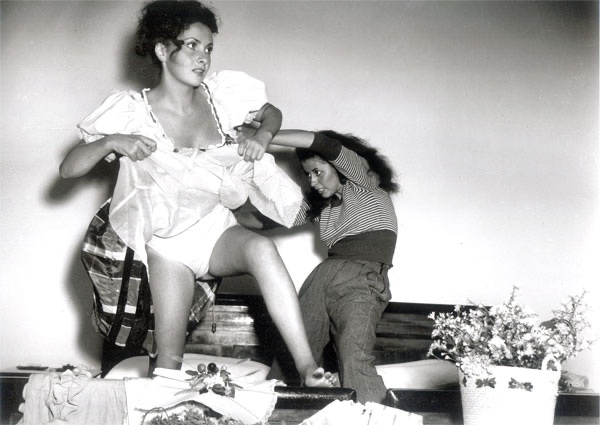
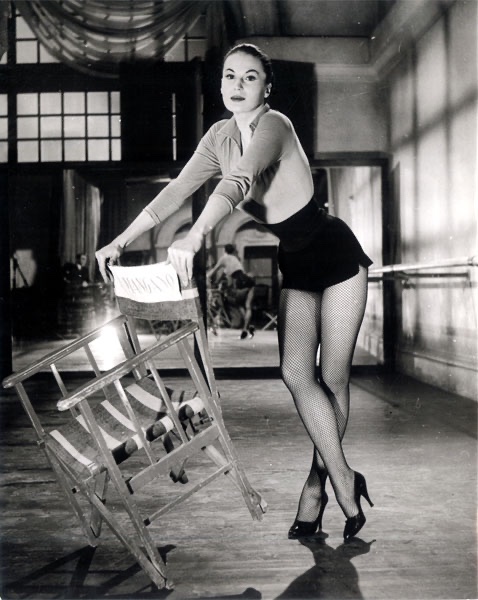
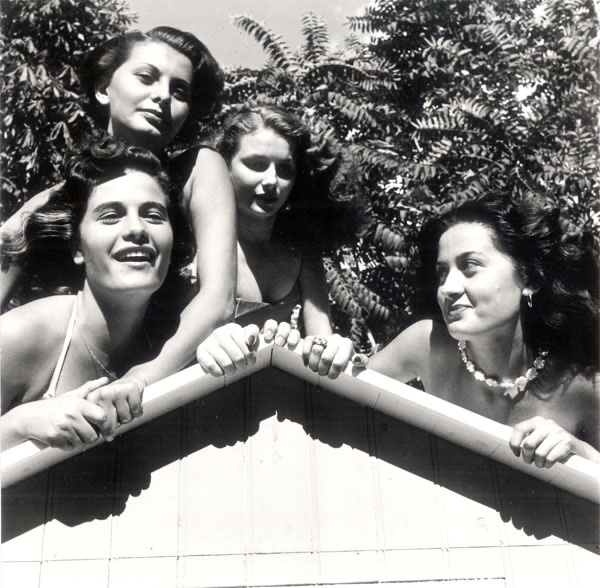
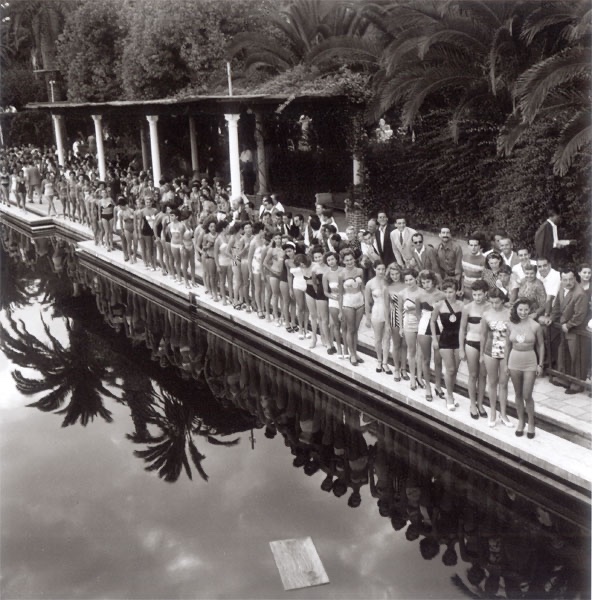
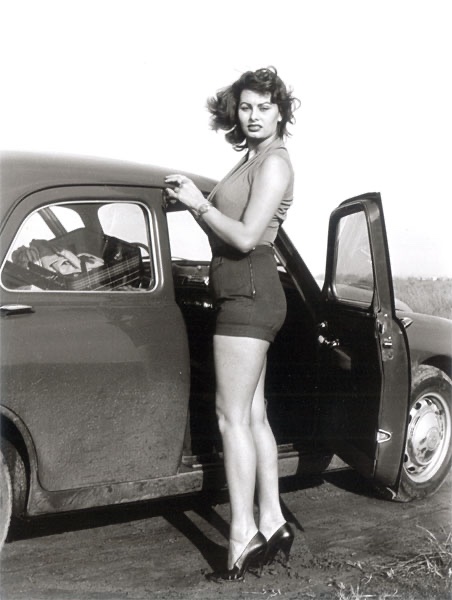
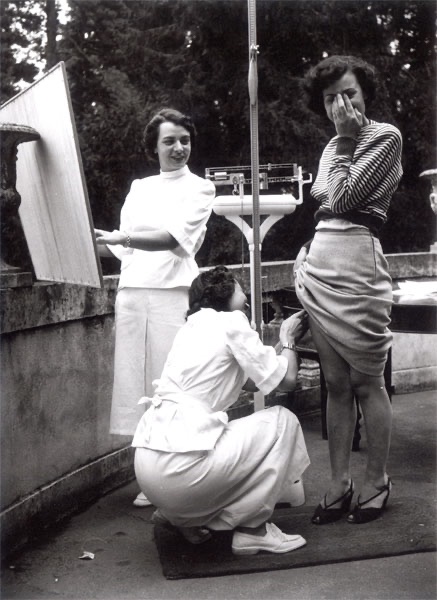
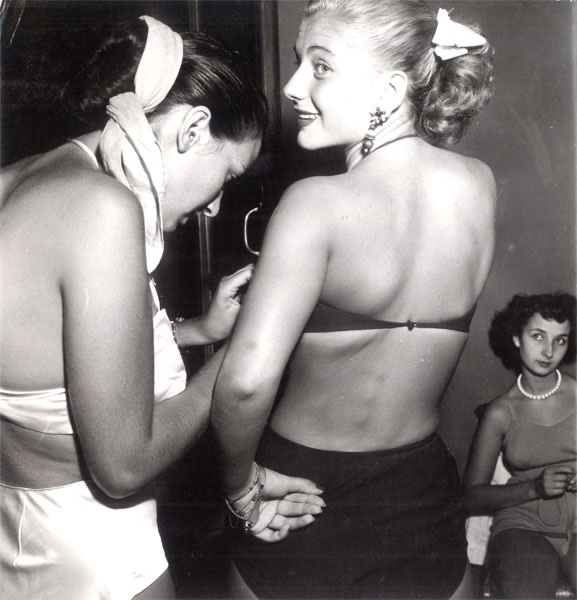
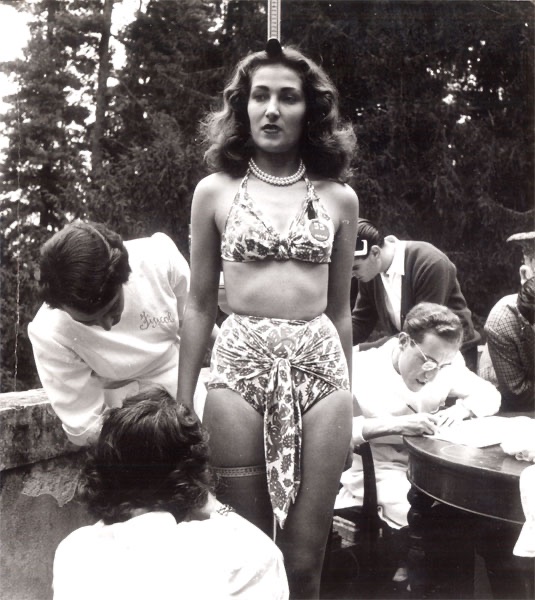
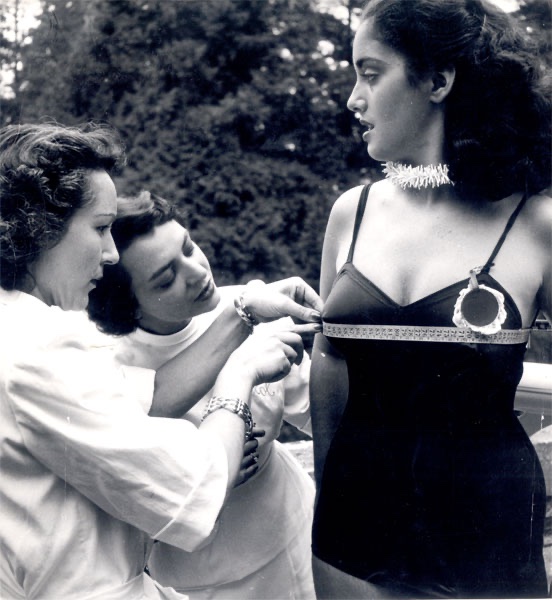
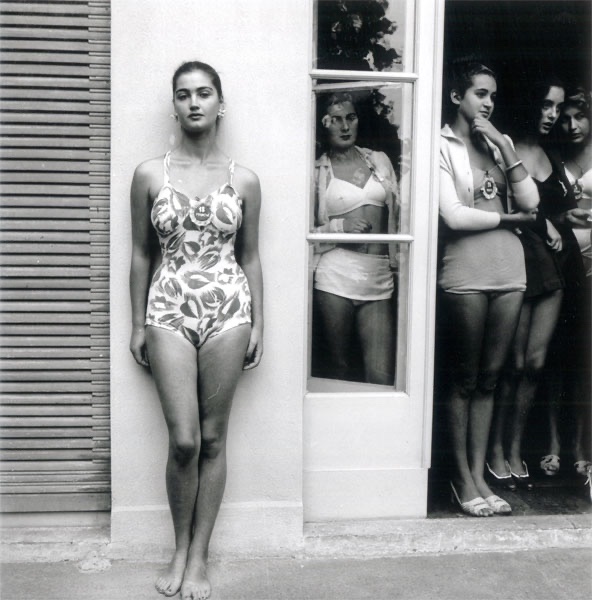
Among the most charming reportages by the Italian photojournalist Federico Patellani (1911–1977) are surely his picture reports on the “Miss Italia” contests of the late 1940s and early 1950s and his photographs from the golden era of Italian cinema. In 1947 Patellani was commissioned by the weekly “Tempo” to photograph the second “Miss Italia” contest. He seems to have taken a liking to the subject, for in the following years he reported regularly on these beauty shows. At the concorsi held in San Remo and Salsomaggiore, the beautiful girl “next door” was sought, and many a film diva was discovered. None other than Gina Lollobrigida, Sophia Loren and Lucia Bosè submitted to the rituals of inspection – an effort that, as we know, paid off.
With technical perfection and a good dose of humour, Patellani captured the preparatory ceremonies, the ritual poses of the candidates, the parades of the competitors and of course the critical gazes of their male admirers. He then followed the budding film divas into the studios of Cinecittà in Rome, where numerous further portraits were made.
The “Miss Italia” beauty contests offered the professional photojournalist Federico Patellani rich material, which was published extensively by the many illustrated magazines of the day. Patellani worked with the stereotypes of his time, and yet his reportages on the beauty contests are a lively portrait of Italy’s post-war generation. Even though the image of femininity of this era is long outdated, the cheerful lack of inhibition with which the young women lived it at the time may make one a little nostalgic.
Federico Patellani did not use his photographs of the concorsi again after their publication in the magazines. In 1979, two years after his death, Editions Magma published the photobook “Und die Schönste, die bist Du”, which initially attracted no attention. In 2002 the book was published again, and in parallel Giovanna Calvenzi and Kitti Bolognesi conceived an exhibition of the photographs. The show deliberately concentrates on this small part of the photographer’s œuvre of some 700,000 negatives. The exhibition “La più bella sei tu” has already been shown with great success at the Centre National de la Photographie in Paris and the Nederlands Fotomuseum in Rotterdam, among others.
Beauty contests are rather controversial today and are mostly regarded as outdated, long-obsolete rituals. The so-called ethics council of the weekly DIE ZEIT recently offered its philosophical assistance on the subject: citing the works of the Greek sculptor Polykleitos and his “colleague and chief classifier” Aristotle, Wolfram Eilenberger came to the following conclusion: “The idea guiding the competition, of an officially certified perfection, is, like all ideas, unspeakably old. One may even suspect that it is the mother of all ideas and thus of philosophy itself. For without norm-giving ideals forever unattainable for ordinary mortals, especially those of (female) beauty, human beings simply do not want to be. […] Whoever critically questions the quality of the criteria of beauty contests is thus turning against the Western canon of values itself.” (DIE ZEIT No. 3, 8 January 2004)
Federico Patellani
Federico Patellani was born in Monza on 1 December 1911 and died in Milan on 10 February 1977. With his picture essays, reportages and star portraits, the Italian photojournalist was the chronicler of post-war Italy – in everyday life as in the cinema. A trained lawyer with pronounced artistic interests (painting), he moved into professional photography after a photo series on East Africa was published in the Milan daily “L’Ambrosiano”. From 1939 he was a permanent contributor to the renowned weekly “Tempo”, published by Alberto Mondadori.
Immediately after the war Patellani delivered picture reports on everyday Italy; his later photo reportages were made mainly on long journeys. Patellani was a pioneer of this genre in Italy: he no longer regarded photography merely as a means of illustration but as an independent medium of journalistic reporting that dominated the text. For “Tempo” he produced so-called “fototesti” (photo texts), complete reportages assembled from text and pictures. Alongside his photojournalism he developed a strong affinity for film. In 1941 he produced the film “Piccolo mondo antico” (directed by Mario Soldati) together with Carlo Ponti. In 1953 he worked as assistant director on Alberto Lattuada’s film “La Lupa”. For many years he photographed on Dino De Laurentiis productions. During this time Patellani photographed or portrayed practically all the greats of Italian cinema.
From the late 1950s he made numerous major reportages in Africa and South America. As a photographer Patellani was an advocate of an aesthetic that depicted reality as accurately (or objectively) as possible. And he was a press professional who marketed his pictures superbly in the then flourishing magazine market, even founding an “agency” for photographers avant la lettre. His estate comprises some 700,000 negatives.