
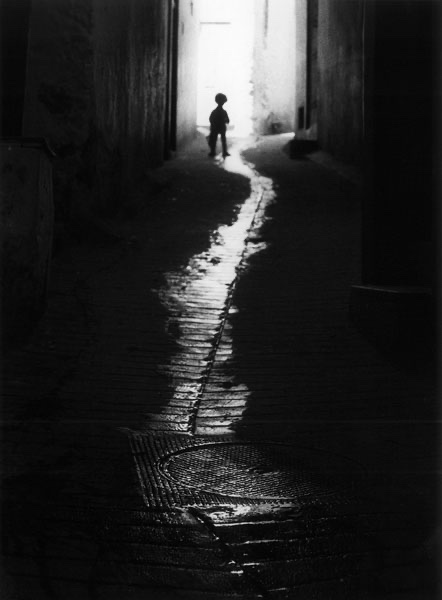
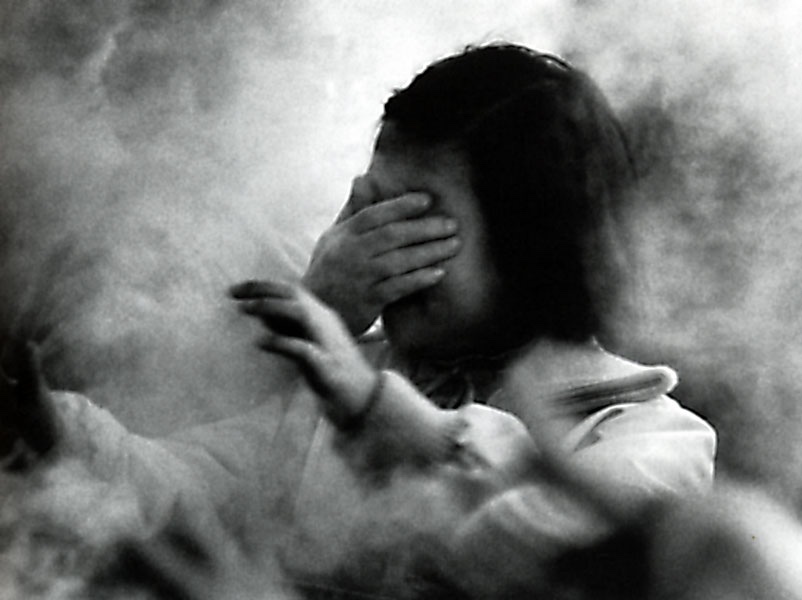
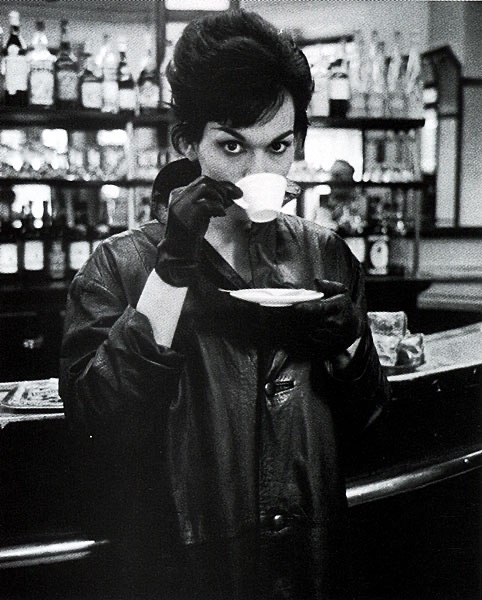
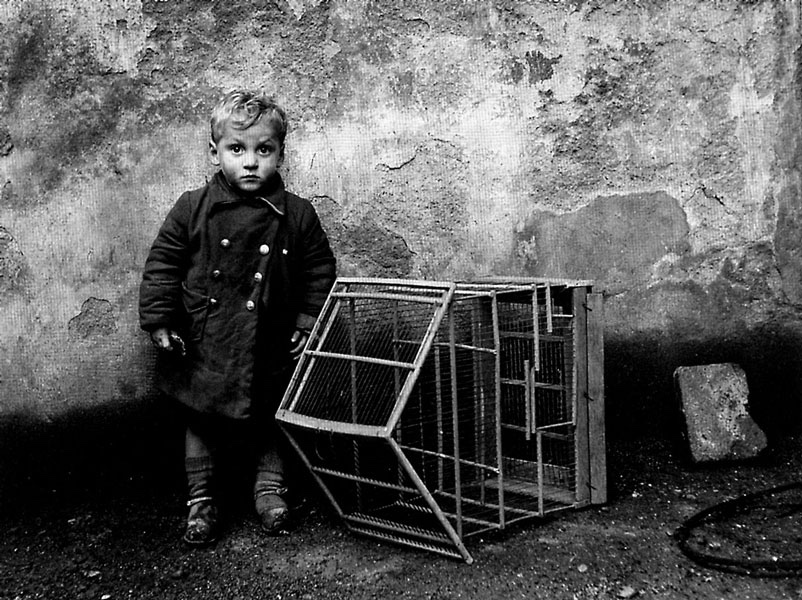
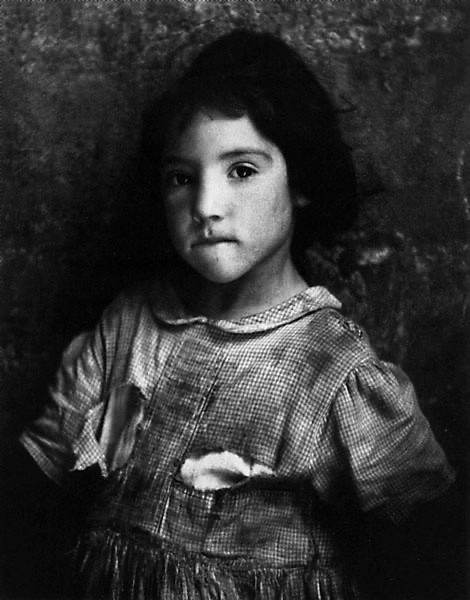
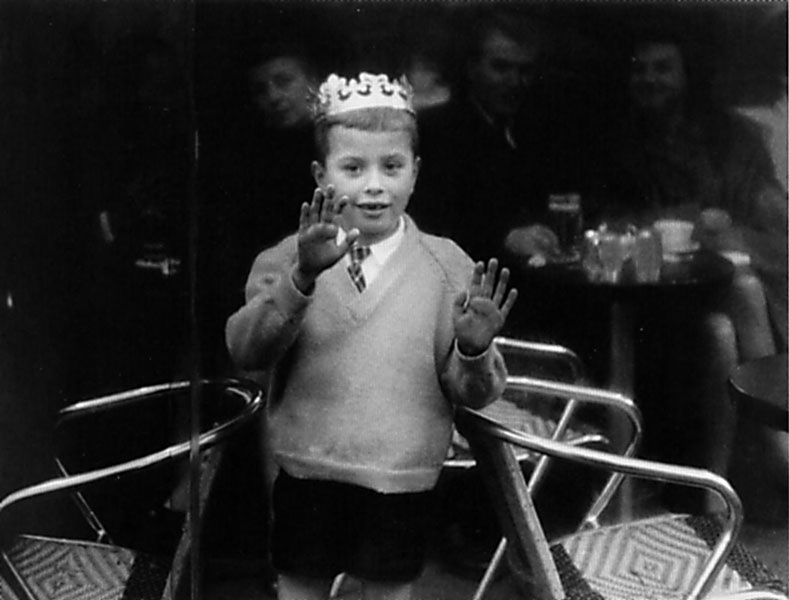
“He is open to everything that might frighten or confuse, open to the threatening. Within a reality that is also dangerous, he captures something essential.” (Peter Weiss)
Christer Strömholm (1918–2002), the most important Swedish photographer of the 20th century, is still associated in Germany mainly with “Subjective Photography”. Only gradually are other aspects of his extraordinary and diverse body of work becoming known and appreciated here. The Forum für Fotografie shows an extensive selection from various bodies of work and creative phases.
Christer Strömholm actually wanted to become a painter. In 1937 he began studying art at the Dresden Academy but soon left for Paris. There, at the end of the 1940s, he discovered photography as his medium. His first photographs from the post-war years show typical bohemian scenes such as artists’ studios or cafés; a little later came studies of structures such as wall surfaces and graffiti, of abstract forms in the landscape or of shadow effects. These works explain his temporary commitment to the positions of the group “fotoform”.
In the early 1950s Strömholm joined the group under the pseudonym Christer Christian, and in 1951 he took part with five pictures in the famous Saarbrücken exhibition “Subjektive Fotografie”. But the Swede was an absolute individualist, and his interest in reality soon led him to other subjects. In 1953 he left “fotoform” and transferred the movement’s pronounced will to form and composition into his own very personal visual language.
Strömholm found a photographic language “corresponding to existentialism” and was compared with many photographers, especially Brassaï. Yet his work eludes clear stylistic classification. Strömholm looked at the world with the eyes of an artist and developed his own visions of the world across an enormous range of subjects. At the same time he sought confrontation with reality and claimed closeness to the person opposite as the basic principle of his photography. “Working with the photographic image is my way of life. When I reflect and look closely at my pictures, they are all – and each one by itself – nothing other than self-portraits, a part of my life,” he described his work in 1983.
Strömholm, who worked as a freelance photographer, was equally interested in documentary photography. At the end of the 1950s he photographed transvestites and transsexuals on the Place Blanche in Paris. With these pictures he caused a stir even in his liberal home country of Sweden. Repeated journeys took him to Spain, North Africa, India, America and Japan. On these journeys he made some of his best-known photographs, such as the portrait of a blind girl or the “White Lady”. As a declared advocate of “available light”, he worked exclusively with existing light, so that while the milieu is part of his pictures, details mostly disappear in darkness.
In the early 1960s Strömholm took over the courses in pictorial composition from the writer and filmmaker Peter Weiss, who lived in Sweden. From these evening classes he developed, together with his colleague and friend Tor-Ivan Odulf, the now legendary Stockholm school of photography, the “Fotoskolan”. Until 1972 more than 1,200 students from all over the world studied there, among them the best photographers of northern Europe such as Anders Petersen, Dawid, Christer Landergren, Kenneth Gustavsson and Ulla Lemberg. Directors such as Bille August and Håkan Pieniowski were also shaped by the school’s undogmatic teaching. The “Fotoskolan” offered a training unique for its time, focusing on the photographic image and not, as was usual then, on technique.
The central concern was engagement with the content of photographs. In principle, photographers were to become aware of their own role, including in relation to their contact with the person opposite. The task was to depict reality while giving the picture a character of its own. “A photograph that is only the exact copy of an object or person always remains just a copy” was one of Strömholm’s teachings. He himself formulated the following basic ideas about his pictures: 1. Responsibility – taking responsibility for the truthfulness of the picture oneself; 2. Insight – combining different experiences into new conclusions; 3. Presence – being present with my feelings, experiences and imagination. Strömholm called the photographic attitude outlined here “exposing oneself” – and it is precisely this attitude that he also demands of the viewer of his photographs.
The world in these pictures is dark and confusing, showing weakness, fragility, vulnerability and death. Nevertheless, these pictures do not try to depict reality. Nor do they want to explain it. In connection with Christer Strömholm’s photographs the word “icon” comes up again and again – and perhaps this is the best term to describe the enormous impact and the unique, unclassifiable character of this photographic œuvre.