“To stop, to hold oneself back, means to create emptiness within oneself.” – Simone Weil
Two masters of emptiness
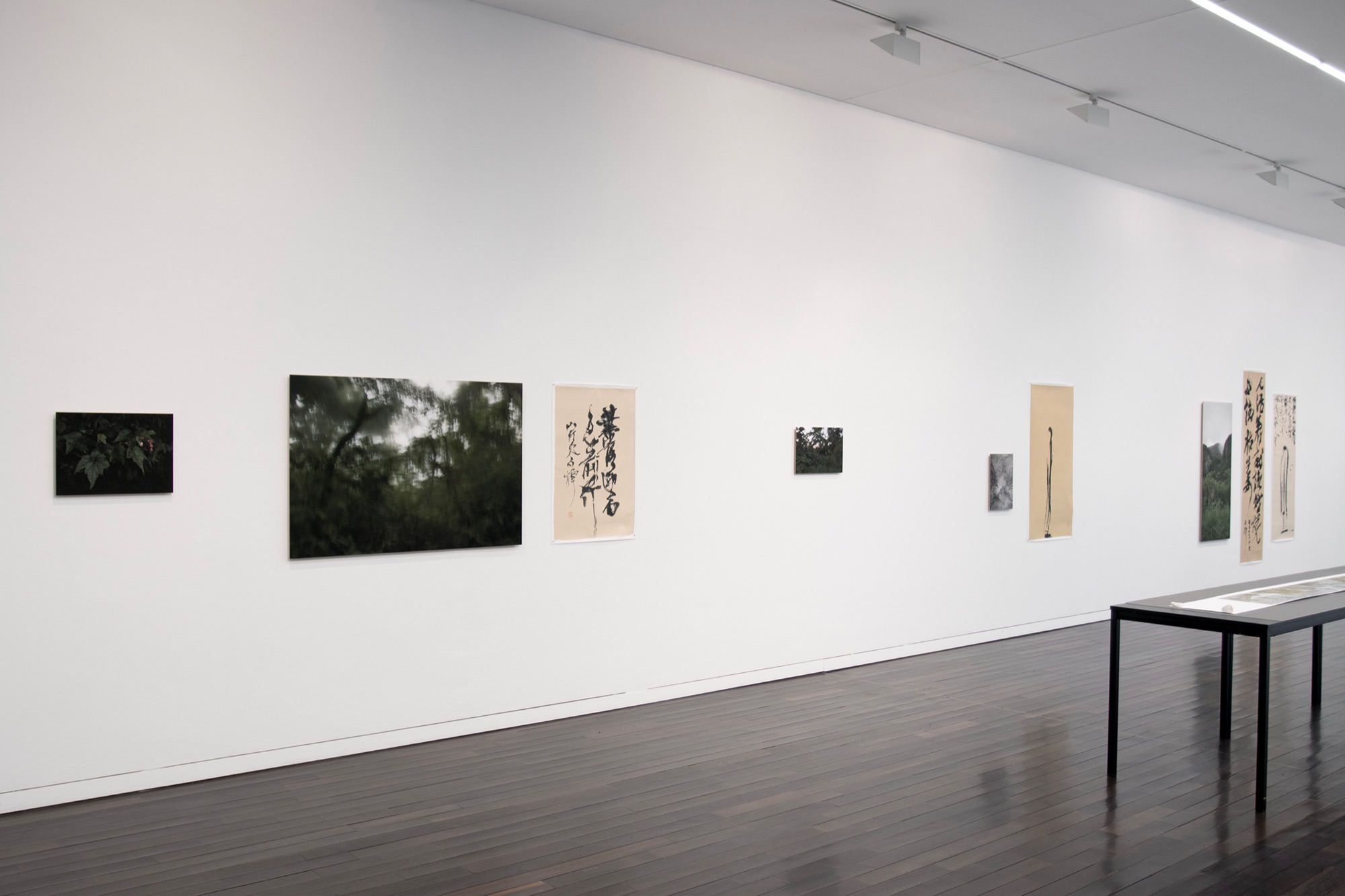
You have to have heard Andreas Walther talk about Taiwan. About the “principle of human benevolence” that shapes how people live together, about an innovative society that at the same time keeps parts of the traditions and values of ancient Chinese culture alive, and about an island blessed with impressive nature. Essentially, it sounds like paradise. He lives there for half of the year, takes photographs and goes on walks in the forests, shows his work in exhibitions and meets the public directly in artist talks.
Walther studied at the Academy of Media Arts Cologne and has great expertise in digital image processing. Aesthetically, however, he was later shaped by philosophical Daoism. That his walks are “aimless” is already part of his aesthetic understanding. For underlying this is the intention to leave behind, as far as possible, the usual conventions of composition, such as centring. For Walther, the aim is also to physically suspend the factor of time, or the moment at which he releases the shutter, because this concentration on the “photographic moment” contradicts, for him, the processual nature of life. Like a Zen archer, he has learned to let the release happen and no longer to hold his breath.
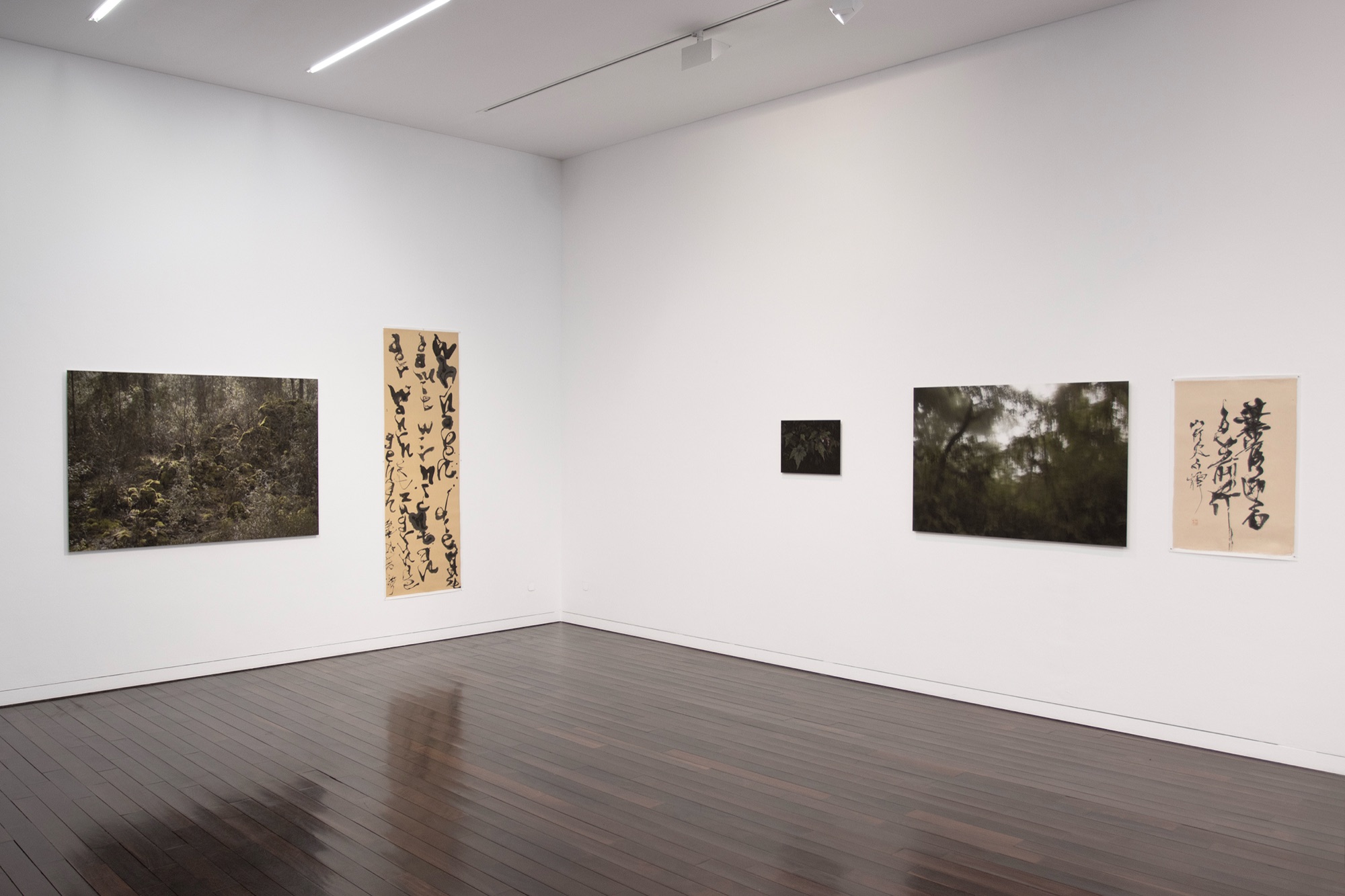
Instead of following an intention, Andreas Walther puts himself into a state. It is not the motif that is decisive but the atmosphere. “It is necessary that, beyond the visual, the acoustics of the forest, the rustling of the leaves and the smell of the earth also find their way into the picture,” he says. Rather than by the intellect, the photograph should be triggered by the body.
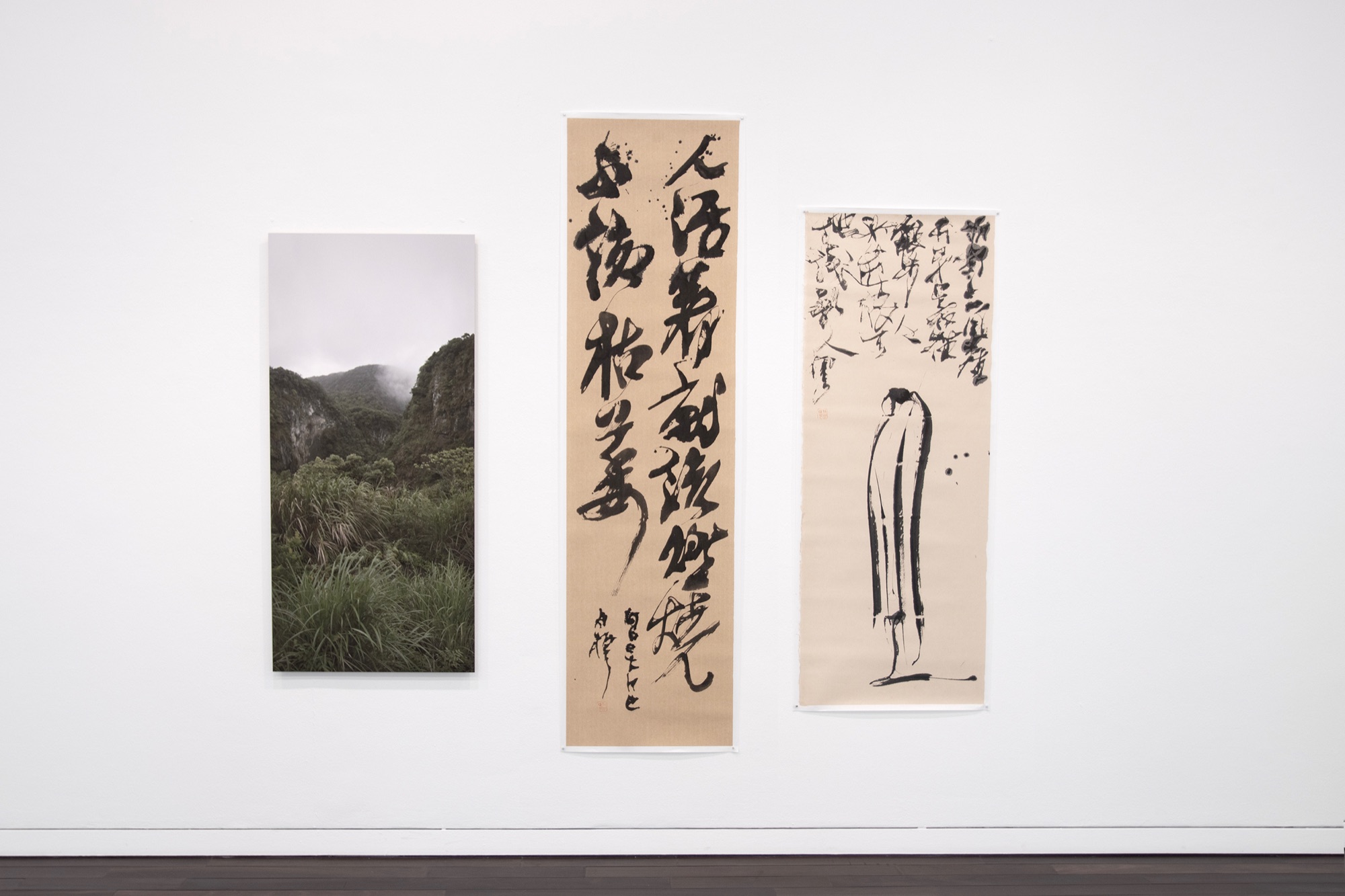
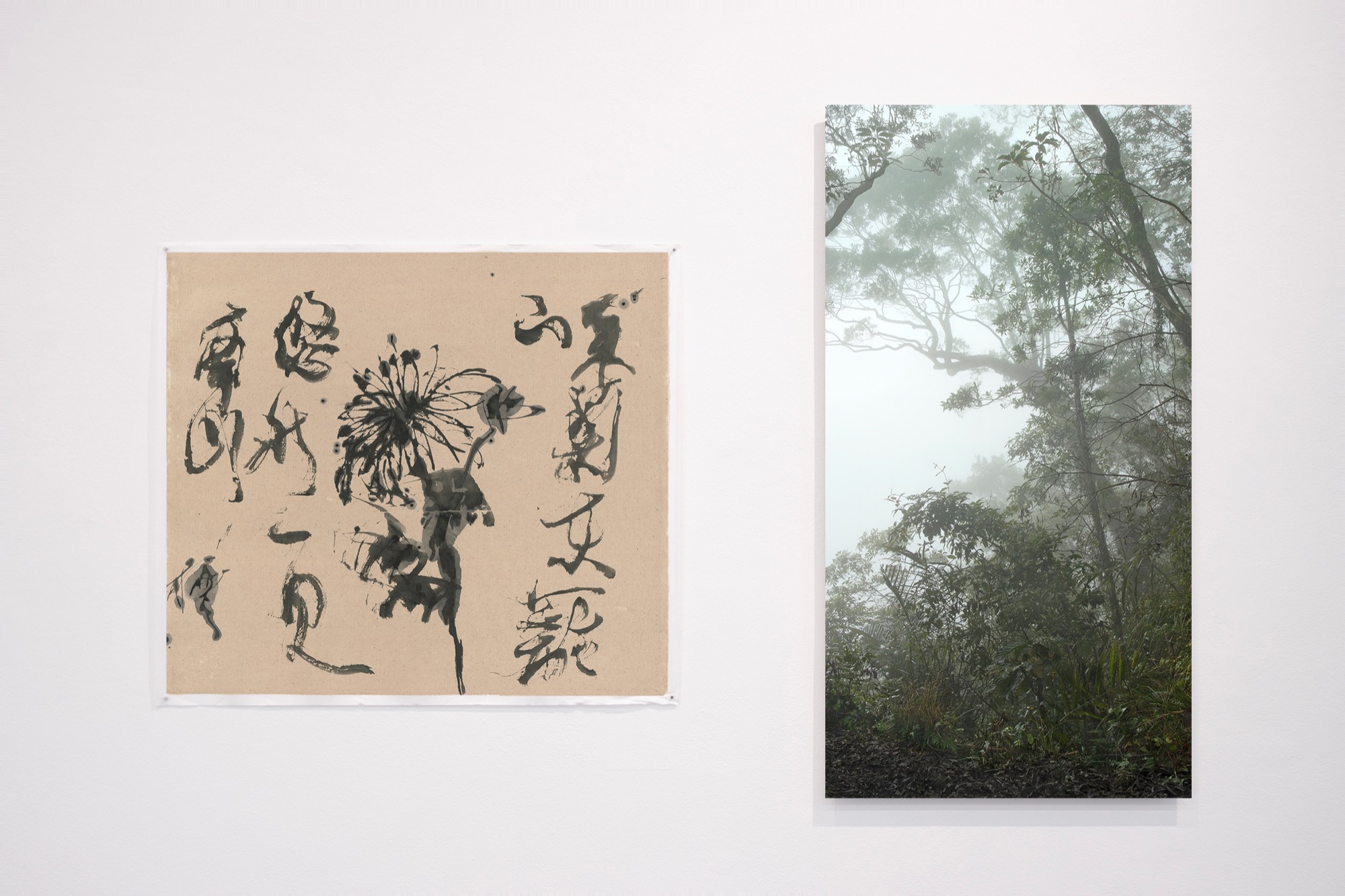
Andreas Walther’s pictures are not oriented towards a dominant motif. There is no visual hierarchy of main and secondary subject. The question of any meaning becomes obsolete because all details are equally necessary. Should a detail draw too much visual attention to itself, Walther tones it down in digital post-processing. In this way he cultivates not only an undifferentiated distribution of light but also of shadow. Nothing focuses our gaze as we look; the eye is free to wander.
Nature as a space of resonance
In this way Andreas Walther turns away from the understanding of landscape in Western painting, for which landscape was a human-made image of inner worlds. Walther, by contrast, is not looking for analogies. For him, the picture does not open onto the stage of a psychological drama. His way of working is based on adopting an attitude. Having no destination is an essential precondition for his walks, so that he can stop at a nameless place. His attention is then no longer directed but belongs to an opening atmosphere “in which the mind calms down and creates a state of inner emptiness”, as Andreas Walther explains.
So it is no longer the landscape that becomes a space of resonance for the viewer in his pictures, but nature.
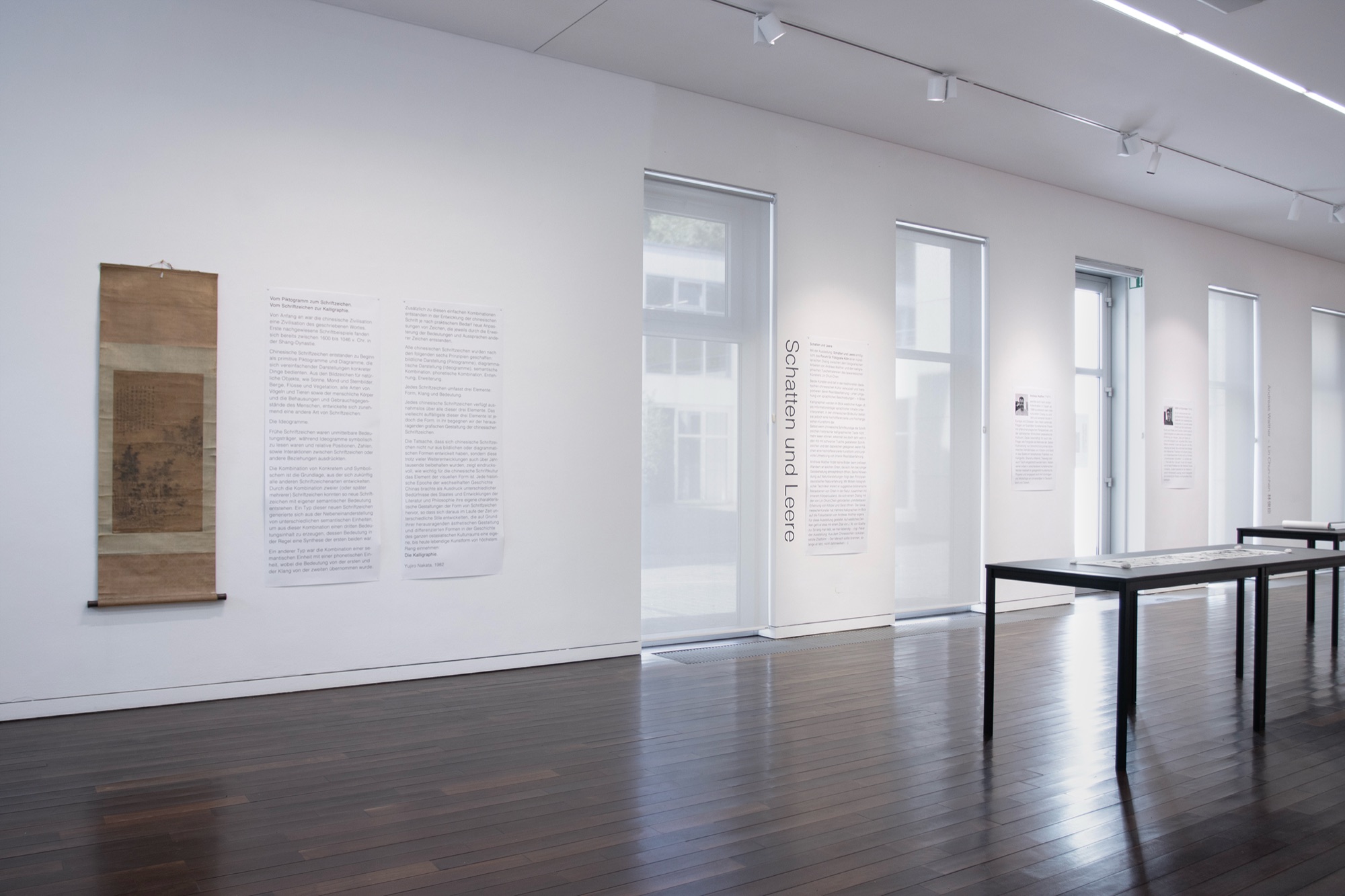
Walther’s works also found resonance in the work of the Taiwanese artist Lin Chun-chen, who teaches as a professor of calligraphy in Lukang. He, too, creates a state of emptiness within himself by generating an atmosphere before the actual impulse to write sets in. Lin Chun-chen speaks of a pleasurable anticipation that takes hold of him before the act. First he familiarises himself with his tools, tests the many characteristics of the brush, grinds the ink stone and copies characters in order to put himself into a state of inner emptiness. Only then does the act of writing begin, with the setting down of the brush, its sweeps and changes and its varying sequences of rhythm. The sheet of rice paper lies on the floor while the calligrapher works above it, and the movements of his body leave traces on the handmade paper. What we see on the sheets is ultimately the living movement of the calligrapher.
Breathing spaces of emptiness
As important as light is to the photographer, paper is to the calligrapher. From its white he “peels out the black character”, as Lin Chun-chen explains. Emptiness, however, is not to be confused with nothingness. Like a house or a bowl, it is a container through which what exists can appear. Because the house is empty, it can take in inhabitants. The bowl can hold contents because it has a hollow. Emptiness thus differs from nothingness through its fullness and the potential it holds in readiness, which promises a future. Like light, it knows no boundaries. In Andreas Walther’s photographs, the edges of the picture do not create a concentration on the centre but give us the impression that the section of landscape could continue on all sides. Nature knows no limits. It is the atmosphere that lodges itself in the memory as a feeling in Andreas Walther’s works.
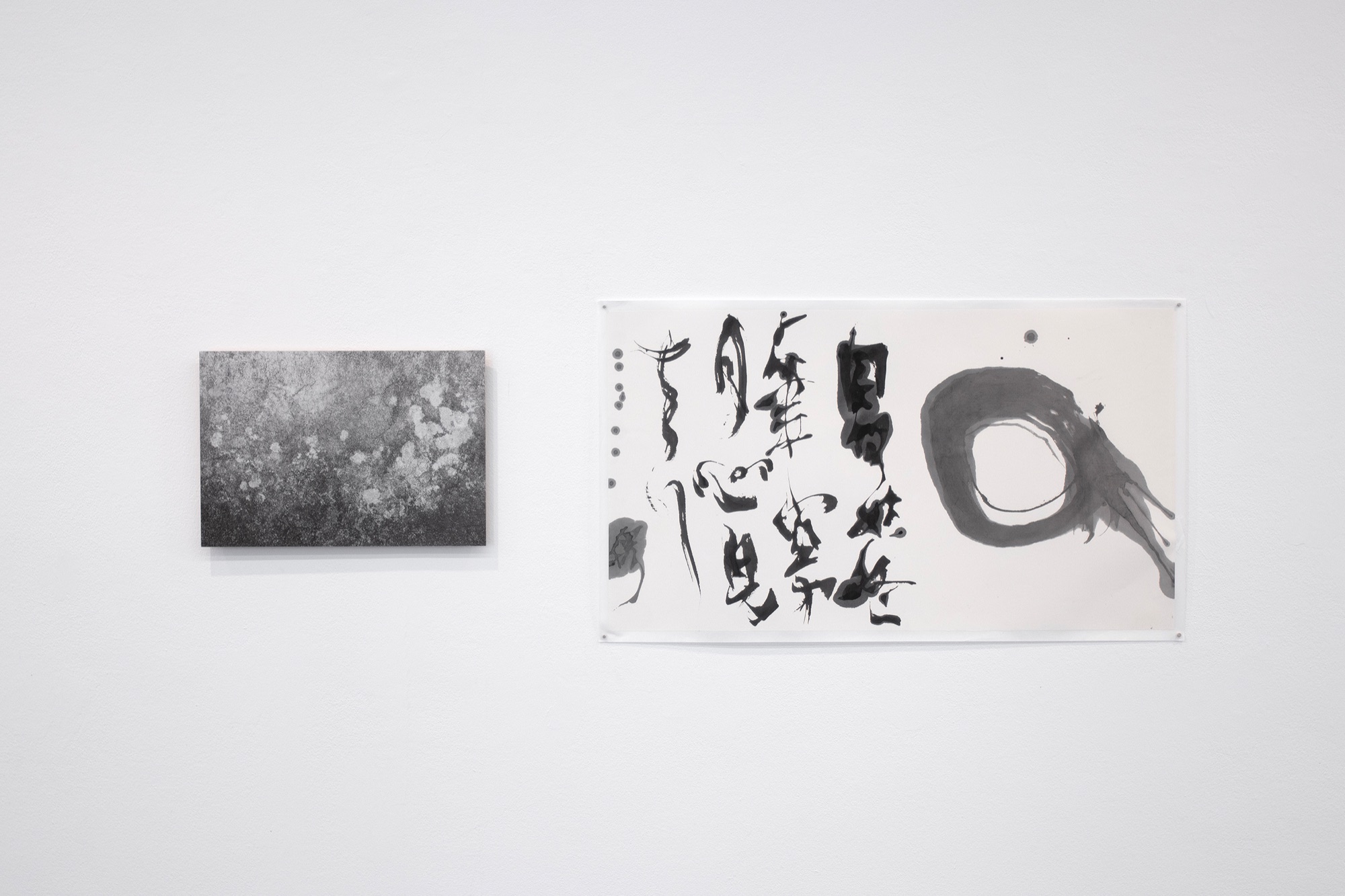
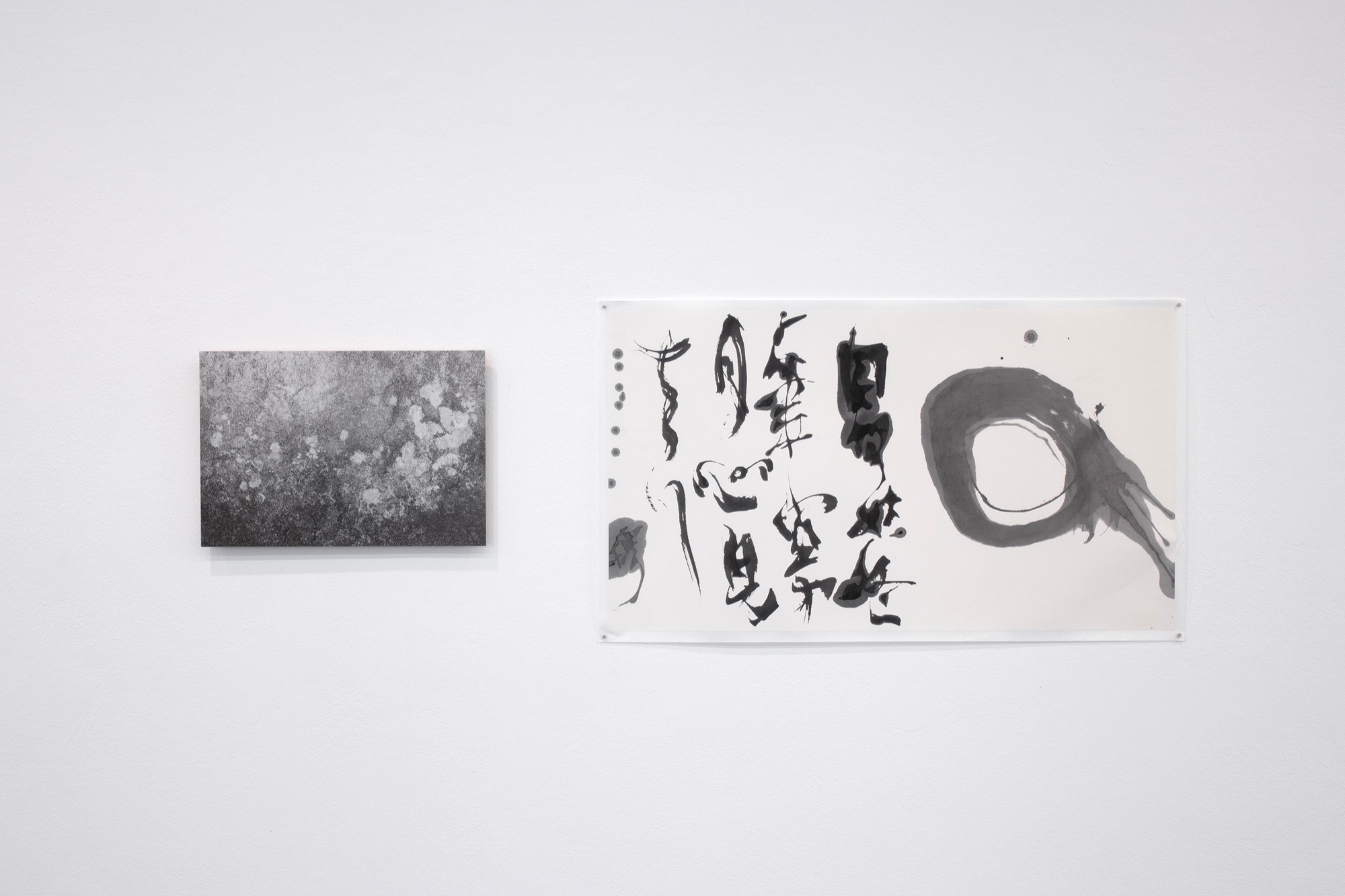
In a work belonging to a series of its own titled “Emptiness”, Lin Chun-chen formulates this dissolution of boundaries in the silence of the landscape, in the noise of the human world and in the sound of the forests – with the acoustics of the different habitats merging seamlessly into one another. There is no beginning and no end. It is this way of perceiving, which understands the world not as the sum of individual parts but as a universe in which everything is connected with everything else, that both artists share. That is why one also searches in vain for a beginning and an end in those photographs by Andreas Walther that show amorphous surface structures to which we could compare nothing familiar. Consistently, they are designated “Untitled”. Lin Chun-chen, for his part, documents the exploration of emptiness in a calligraphy with the words:
“A circle – without beginning, without end. A single stroke: a moon in the void: there the heart recognises the truth.”