The initiative for the ISLANDBILDER festival originally came from the Alfred Ehrhardt Stiftung, which took the 50th anniversary of the Deutsch-Isländische Gesellschaft e. V. Köln as an occasion to propose this festival. There is a close connection between Alfred Ehrhardt and the German-Icelandic Society: in 1938 Alfred Ehrhardt married the daughter of the physicist and Iceland expert Ferdinand Dannemeyer, who had led two expeditions to Iceland in the 1920s. She accompanied him the same year on his first film and photo excursion to Iceland. Ferdinand Dannemeyer founded the Gesellschaft der Freunde Islands e. V. Hamburg in 1950; five years later the Deutsch-Isländische Gesellschaft e. V. Köln followed.
With the exhibitions Alfred Ehrhardt, Ragnar Axelsson and Magnús Ólafsson, the Alfred Ehrhardt Stiftung continues its series of double exhibitions begun in spring 2004. The exhibition of photographs by Alfred Ehrhardt is shown in the foundation’s own premises, while the Alfred Ehrhardt Stiftung is a guest at the Forum für Fotografie with the exhibitions of Ragnar Axelsson and Magnús Ólafsson.
Unlike the first double exhibition, three positions differing in time and content are juxtaposed, each conveying a very different picture of Iceland.
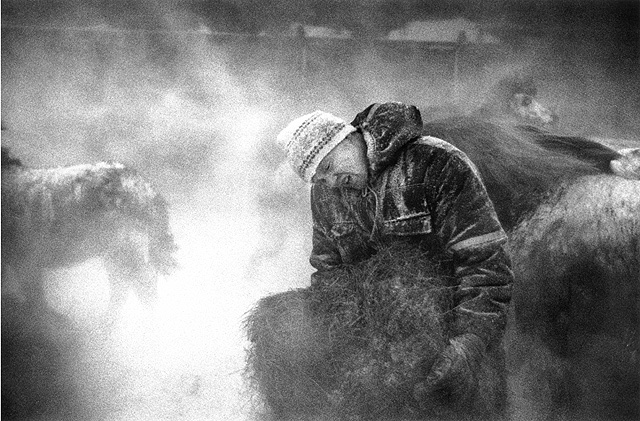
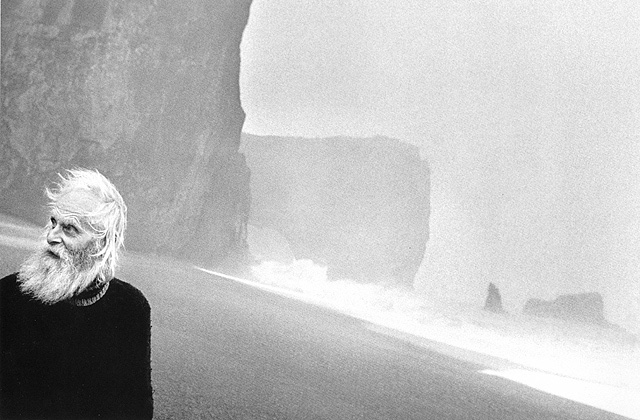
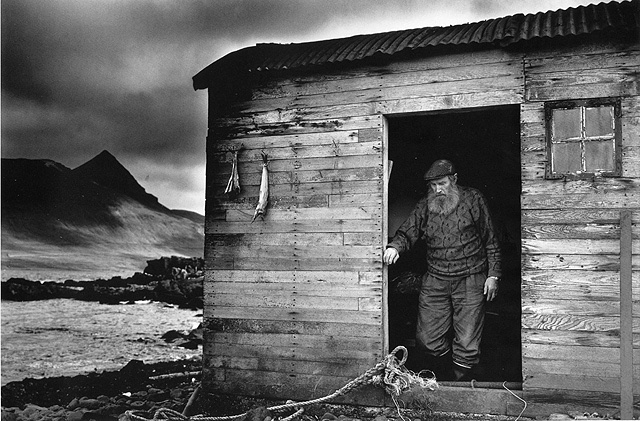
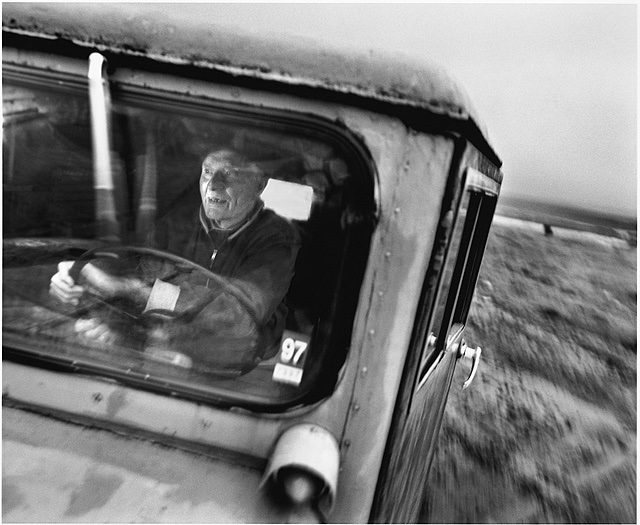
Ragnar Axelsson – Iceland today
Ragnar Axelsson (b. 1958), known by the pseudonym RAX, has for years been one of Iceland’s leading photographers. Working since 1976 as a photojournalist for Iceland’s largest newspaper, Morgunblaðið, he has had his photographs published in National Geographic, Time, Life, Stern and Le Figaro, to name but a few. His award-winning photographs have been shown in Reykjavík, London, Perpignan, Arles, Milan, Vannes and most recently in Berlin and Hamburg. RAX is a tireless traveller who will hold out at temperatures of minus 40 °C for a good photograph. For more than 15 years he has documented the threatened traditional life of people in the North Atlantic regions of Iceland, Greenland and the Faroe Islands. Over the years his long-term project has taken on features of a socio-cultural study of the dwindling identity of communities living far from the cities. His pictures reflect the extreme living conditions in people’s faces, marked by the harsh northern climate. They are fishermen, hunters and farmers, taciturn and headstrong people who defy the elements and rural exodus. RAX’s bond with his country and his profound knowledge of its cultural background are evident in this work. His pictures show how globalisation is spreading even in previously completely forgotten regions, leaving wasteland behind. It is thanks to Ragnar Axelsson that the traditional life of Iceland’s fishermen, hunters and gatherers will at least be preserved photographically for posterity.
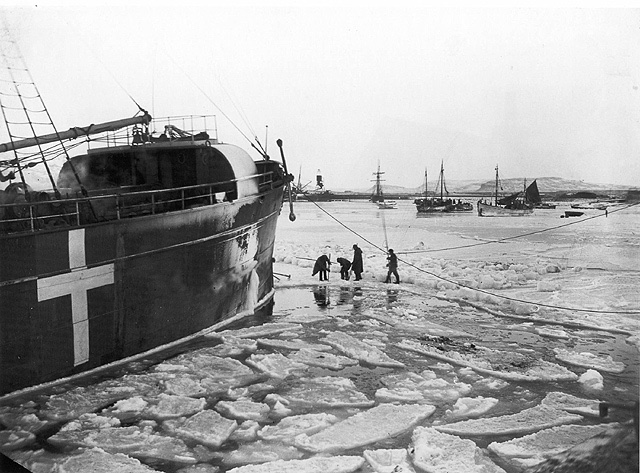
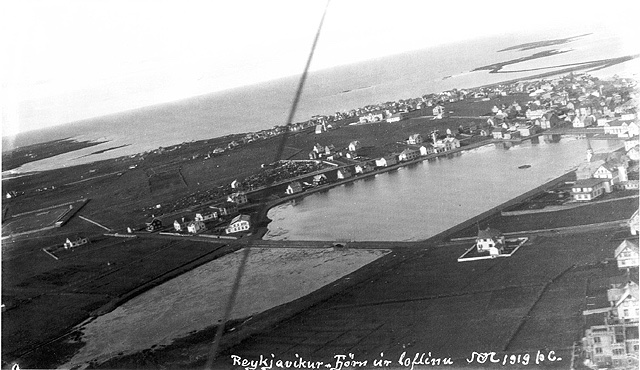
Magnús Ólafsson – Iceland 1907–1937
Magnús Ólafsson (1862–1937) is one of the greatest pioneers of Icelandic photography. His work, which illuminates the living conditions of a half-century shaped by technological progress, social change and urban development, forms the basis of the collections of the Reykjavík Museum of Photography, which has lent these pictures. Magnús was a shopkeeper in Akranes in the west of Iceland when, at the age of 39, he decided to turn his hobby into a profession. He went to Copenhagen to learn from the leading Danish photographer Peter Elfelt. He then opened a photo studio in Reykjavík. Magnús introduced stereoscopy to Iceland, which delighted the masses there as on the continent. Through him, panoramic photography, which emerged around the turn of the century, also became very popular in Iceland. Likewise, the first aerial photographs of Reykjavík are owed to him. His work includes documentary photographs of social and political events, from the visit of the Danish king in 1907 to the millennium celebrations at Thingvellir in 1930. He also photographed fishermen in the harbour, women bakers, butter sellers and ironers, or simply people in the street, as well as the life of farmers, sheep breeders and stockfish producers outside the capital. His view of representatives of all social classes, his portrait style and his outstanding importance for the history of Icelandic photography invite comparison with August Sander. Like Ragnar Axelsson’s work, Magnús Ólafsson’s pictures are invaluable documents for Icelandic historiography.
In parallel, the exhibition “Alfred Ehrhardt – Iceland in Photography and Film 1938” is taking place at the Alfred Ehrhardt Stiftung, in cooperation with the National Museum of Iceland, Reykjavík.
Alfred Ehrhardt – Iceland in photography and film 1938
After the photographer and documentary filmmaker Alfred Ehrhardt (1901–1984) had completed three years of work on his first and today best-known photo cycles, “Das Watt” and “Die Kurische Nehrung”, in 1936, his next goal was already clear: Iceland. His search for the elemental forces of nature in a “primeval landscape” untouched by humans led him in 1938 on his first two-month photo and film excursion to Iceland, where he hoped to gain insight into the process of the world’s creation. A year later he published his pictures in a photobook, and in 1941 his 15-minute documentary “Nordische Urwelt” premiered. Ehrhardt’s strictly reduced compositions convey his nature-religious impression that humans are merely part of overwhelming, timeless nature. He paints a picture of silence, solitude, vastness and grandeur. Hardly a trace of humans: no photograph of Reykjavík or of typical Icelandic activities such as cod fishing, bathing in hot springs or sheep farming, only rarely pictures of rural dwellings or decaying farms – instead he complements the overall impression of the landscape with close-up details of rock formations, calcareous sinter deposits or cracked mud. These abstract studies of structure reveal his training at the Bauhaus Dessau under Josef Albers. In addition to the photographs, the film “Nordische Urwelt” is shown in television format at the Alfred Ehrhardt Stiftung, while it can be seen in its original format on the cinema screen at the Filmhaus Köln. A catalogue was published by Hatje Cantz in cooperation with the National Museum of Iceland, which showed the exhibition in summer 2006.