



Around 200 years ago the poet Novalis demanded: “The world must be romanticised.” By this he meant an “attuning upwards” through one’s own imagination in order to endure the impositions of one’s present. Since then the “romantic” has mostly been in vogue in bad or uncertain times – and so it is to this day, as Rüdiger Safranski showed last year in his study of Romanticism as a “German affair”.
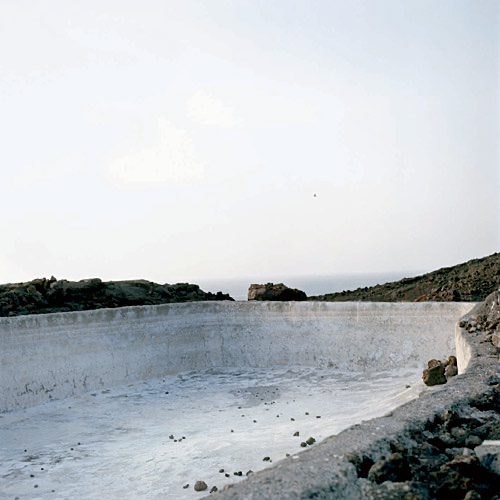
In the Department of Design at FH Bielefeld, graduates of the photography programme, under the direction of Prof. Roman Bezjak (documentary photography) and Prof. Dr. Anna Zika (theory of design), engaged for two semesters with theoretical positions of historical Romanticism and the topicality of the romantic. Selected visual results of the seminar are on view under the title “fragment.romantik” at the Forum für Fotografie Köln.
The very different positions revolve around themes such as the experience of nature or states of mind, and aspects of Gothic Romanticism are not neglected either. That German Romanticism was originally and initially a literary movement becomes clear, among others, in the work of Milena Carstens: she visualised the genre of the literary fairy tale in the footsteps of Romantic poets who tried to integrate the wondrous and the fantastic into the reality of everyday life.
Sabrina Dirkwinkel translated motifs from Eichendorff’s moon poems into photographs. By the time painters such as Caspar David Friedrich began to transform the poetic programmes of contemporaries such as Brentano or Arnim into visual art, the “romantic” had long been developed in theory as a category of perception and an inner attitude.
In her multi-part work, Melanie Vogel updated the question of criteria of judgement and developed a shimmering aesthetic at the tipping point between the romantic and the non-romantic;
Stephan Sasek shot his series “Dioramen” in the display cases of German natural history museums, where fox and hare bid each other good night in picturesque artificial nature;
Dominik Dupont enlarged photographs of forest damage caused by last winter’s storms into looming tableaux of sublime effect.
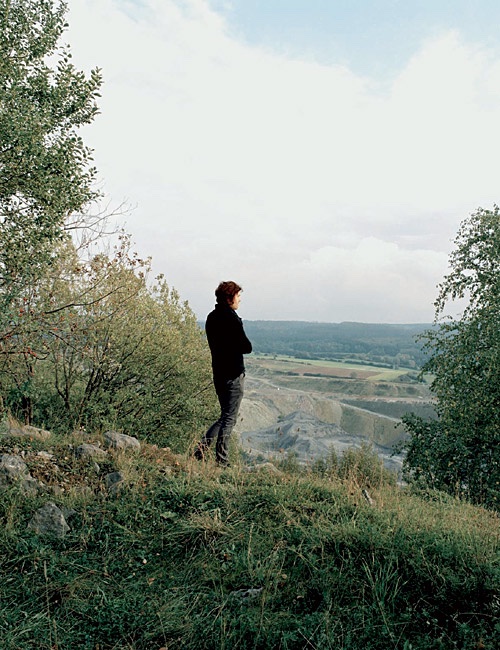
Particular attention was paid to “Romanticism” as an intellectual and spiritual attitude that may well be marked by irrationality. For example, Verena Brüning followed modern city dwellers to their personal retreats in seemingly “free” and untouched nature;
Agotha Vincze worked historical family portraits into a sensitive study of romantic ties.
In surreal portraits, Alexander Gehring examined the state of complete derealisation during sleep as a phase in which all laws of rational thought are suspended – “Hypnos” appears as an otherworldly form of existence between the unconscious and memory in the sense of a Romantic worldview;
Christine Skowski portrayed young women of her own age as both very feminine and strong figures in self-confident, self-contained poses of emancipation and the wish to be desired;
Sarah Berger created soul landscapes of her own inner states, which she had embodied by five different women, referring to a quotation by the Romantic E. T. A. Hoffmann: “Optical perception depends on the state of the soul”;
In his portrait series, Andreas Neumann devoted himself to the Romantic conception of friendship as an affinity of souls and elective affinity.
Tina Volzer even gave a face to houses, which she photographed at night; the glowing windows make even buildings in lonely areas seem strangely animated.
At the Externsteine in eastern Westphalia, Gesche Jäger tracked down spiritual gatherings of the most diverse groups, between esotericism and nationalism, who celebrate the mystical night of the winter solstice there; the sublime natural setting fulfils classic expectations of the wildly romantic.
Finally, Sonmi-Kyung captured the mysterious, melancholy spell of so-called “dark Romanticism” in night-time pictures of picturesque treetops.