
Georg Stefan Troller, born in Vienna in 1921, is an author, television journalist, director and filmmaker. German audiences know him above all for the now legendary “Pariser Journal”, broadcast by ARD in the 1960s, and the television series “Personenbeschreibung”, which he led as ZDF’s special correspondent in Paris and which set standards in the field of the interview.
Troller always aimed to get people to reveal something about themselves that they either did not yet know in this way or had cleverly repressed or hidden. With the appearance of an eccentric big-game hunter and old warhorse and his at once modest and inquisitive, winning manner with a Viennese touch, he repeatedly succeeded in bringing the personal secrets of his interviewees to light.
His documentary films are forays, marked by great curiosity about life and ironic humour, through the Paris of poets, workers, writers, film stars, market women and intellectuals. As if through a kaleidoscope, the German television viewer of the 1960s looked with the cultural mediator Troller at the realities of life in the French metropolis and was allowed, from this perspective, to share in the French flair and esprit of the Grande Nation.
As an author, too, Troller, resident in Paris since 1949, has repeatedly engaged with his adopted home. His texts often seem like miniatures and portraits of the world of ordinary people in “winding quarters in which old and new, sublime and base, posh and shabby mix and merge into one another”.
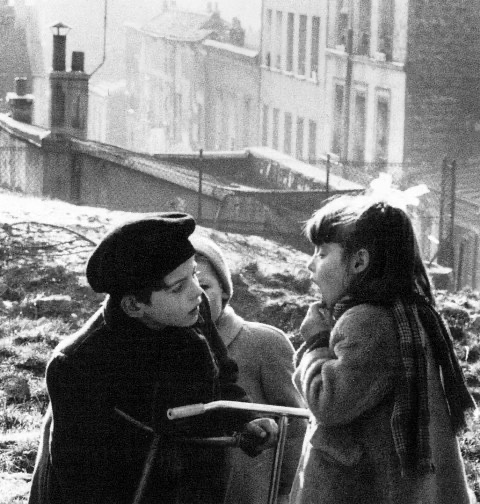
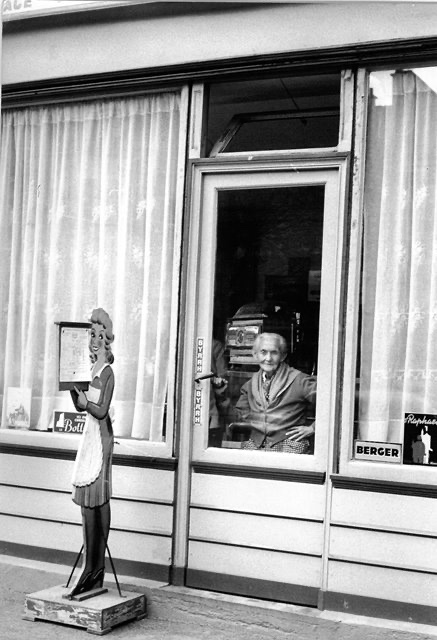
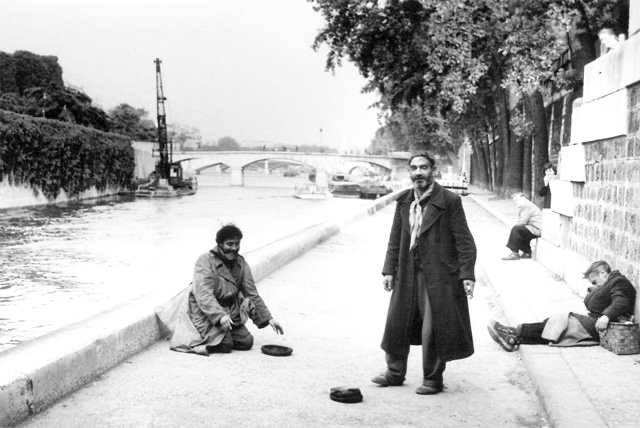
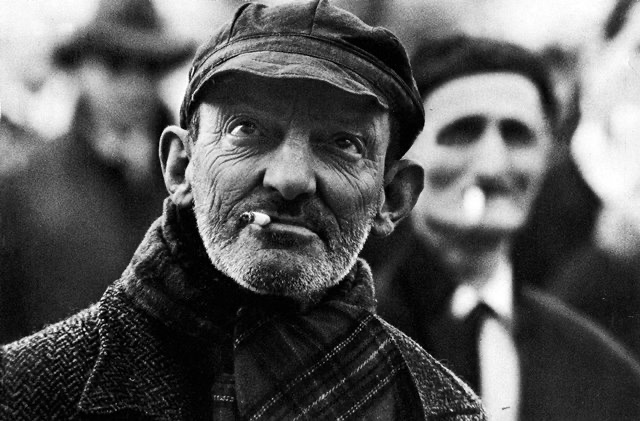
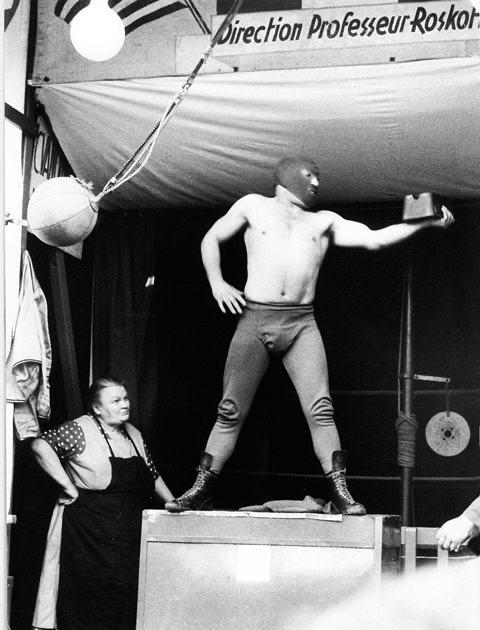
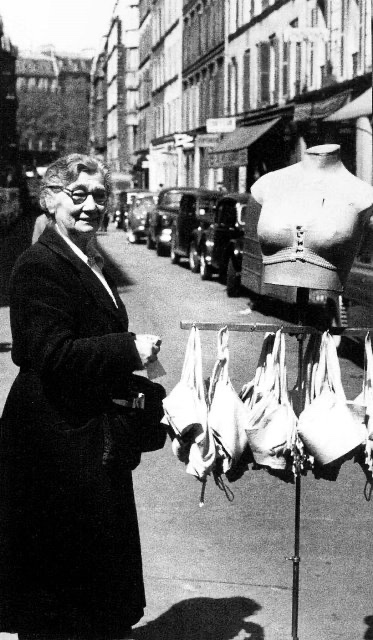
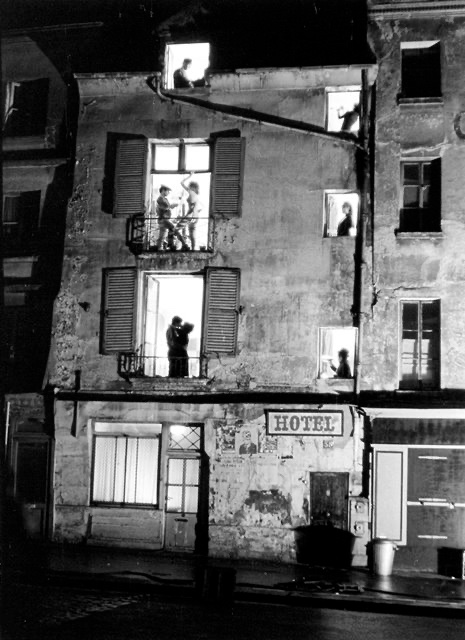
What has remained unknown is that as early as the beginning of the 1950s Troller documented this now largely lost world of the Parisian petit peuple with a Leica. Only in 2016 did his daughter rediscover these photographs, which he himself believed lost, in his old Paris apartment.
The Forum für Fotografie shows these pictures and makes them accessible to the public in an exhibition for the first time.
In 2017 Corso Verlag in Wiesbaden published texts by Georg Stefan Troller from that time together with the rediscovered black-and-white photographs under the title “Ein Traum von Paris”. In his foreword Troller writes in retrospect:
“So I set off, at times every single Sunday, and sometimes only late in the evening. The camera in my hand, the light meter round my neck, and a folding street map of Paris in my pocket. On it I gradually marked the districts I first hoped to penetrate. For instance the area around the banks of the Seine – the historic centre – the Marais ghetto – the market streets around the Rue Mouffetard – the ‘Quail Island’ (Butte-aux-Cailles) near the Gobelins – the Place Clichy and the boulevards at the foot of Montmartre with their grotesque fairground booths. Yes, and finally, and for the longest time, the lost, hidden streets and alleys of eastern Paris between the Buttes-Chaumont park and Père Lachaise cemetery, a world of its own. And one that was about to disappear.”
Indeed, in his photographs Troller takes us into an enchanted world in which the metropolis of the time still seems in part bound to the appearance of the 19th century.
Here is someone photographing who is completely absorbed in his subject and passionately seeks and finds the urban surroundings of the urban proletariat of the time: the chaotic backyards, the crumbling façades, the self-confident characters and playing children, the cats, the dirt and the long shadows. He is driven by the desire to grasp the character and flair of this vanishing world of ordinary people, who are increasingly being pushed out of their traditional quartiers into the suburbs.
Through Troller’s texts and photographs we are briefly given the illusion of sharing in the closeness he experienced to the closed and dreamy microcosms of the French metropolis.
The exhibition was prepared in cooperation with Norbert Bunge – Galerie argus fotokunst Berlin.