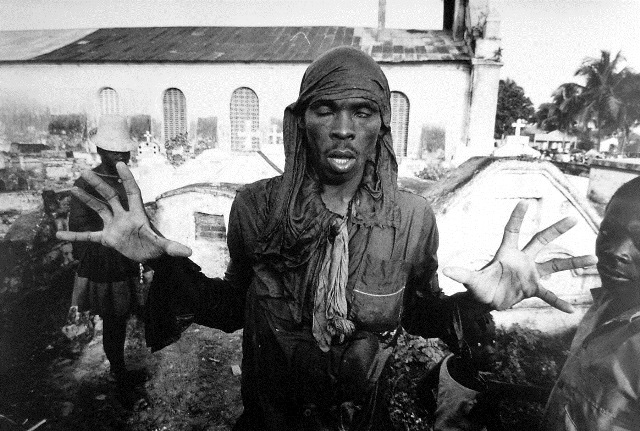
The face is the key to a person’s personality. From an artistic portrait we therefore expect it to show us more than the mere appearance of a person. The ambivalence of identity and image is particularly inscribed in the photographic portrait, as Roland Barthes put it: “For the Photograph is the advent of myself as other: a cunning dissociation of consciousness from identity.” States of consciousness are also what Leonore Mau’s photography is about, when in her central work she turns to the Afro-American religions of Brazil, the Caribbean and Miami, or documents the psychiatric villages in Africa. The trance states induced in the rituals of Macumba, Candomblé and Santería, and the states of consciousness of the sick under the influence of psychotropic drugs, are reflected in the faces and captured in the portraits.
Leonore Mau succeeds in the portrait by penetrating her models psychologically and their social contexts anthropologically and sociologically. This gives rise to her artistic conception of the face. Thus the pictures emerge of faces marked by the spirit, possessed by gods and demons, or interwoven with masks. Leonore Mau photographed for major German magazines. Like many other documentations, her photographs from Miami were published in Stern and Die Zeit to accompany texts by Hubert Fichte, as illustrations of journalistic reporting.
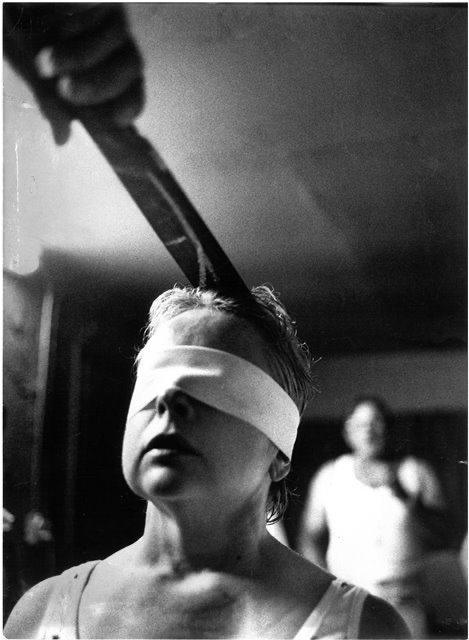
In a series of motifs, the photographer depicts initiation ceremonies of the Kongo in Miami, conveying to the viewer the rigour of the staging and the strict sequence of the ritual acts. The portraits of the initiates offer insights into the invisible and visualise hidden taboos. They are portraits of people who lose consciousness, are in trance and believe that gods take possession of their body and mind.
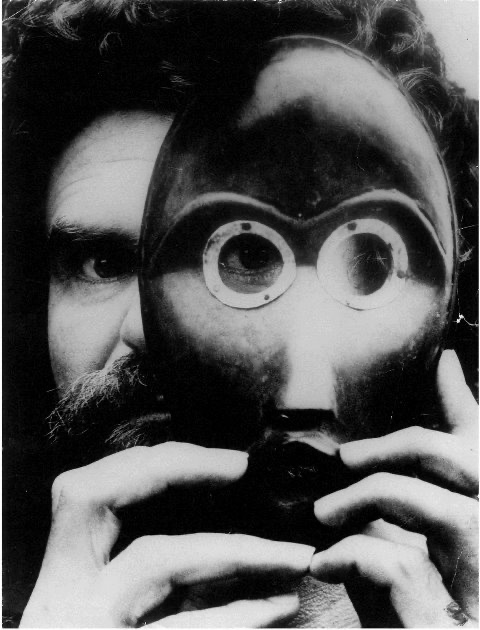
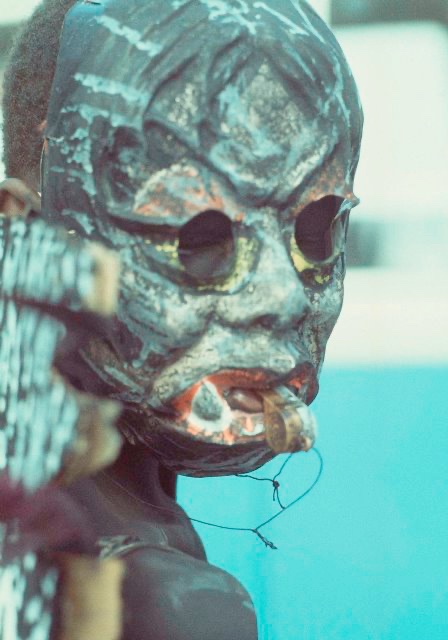
The painting and the dousing with milk and blood resemble the maskings that Leonore Mau documented at the carnival in Haiti and Trinidad. In this context she made pictures of striking heads with full and half masks. Among the numerous portraits of Hubert Fichte there is one in which he covers half his face with a Dan mask. His words on it: “With nothing does one expose oneself as much as with masks. Naked, in order to slip away.”
Text: Franziska Mecklenburg