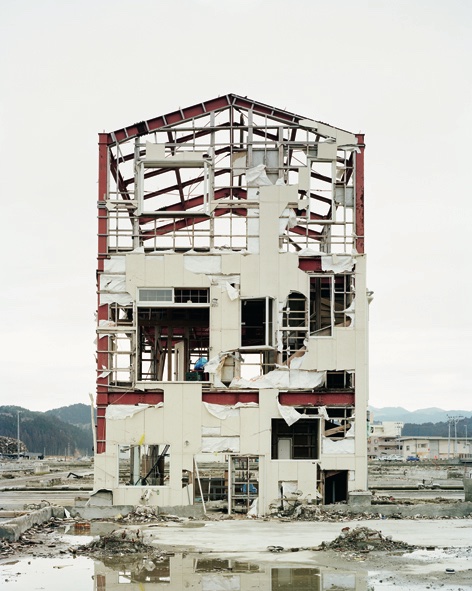
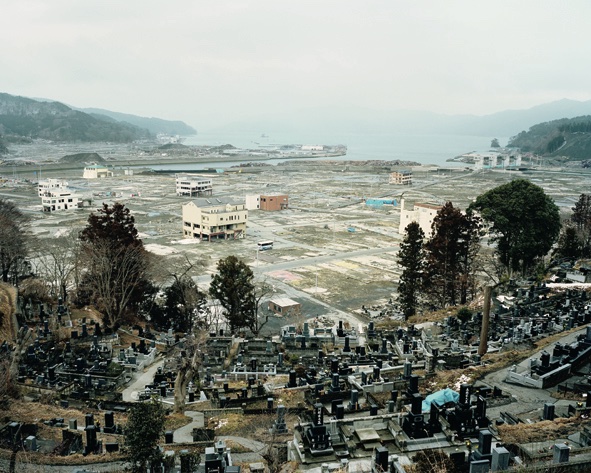
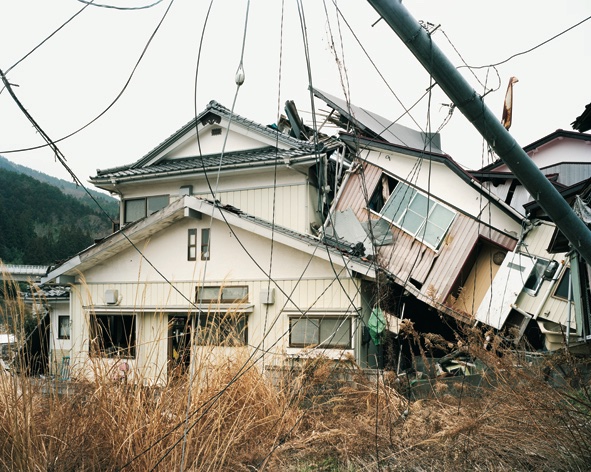
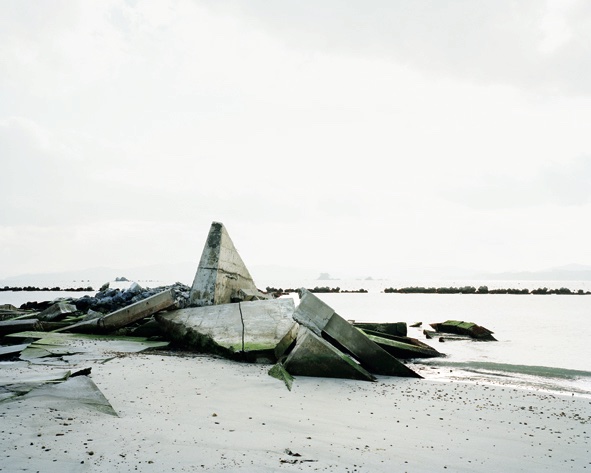
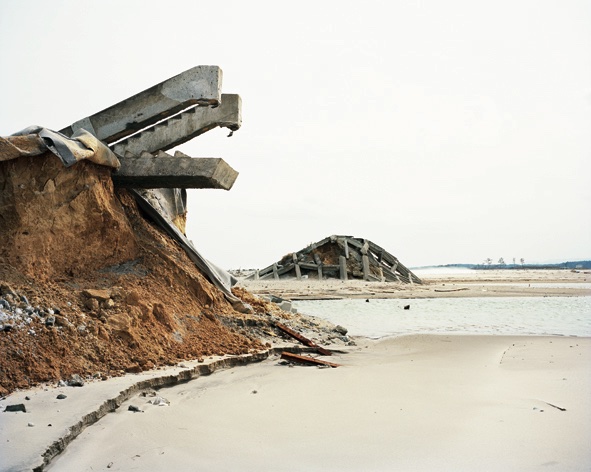
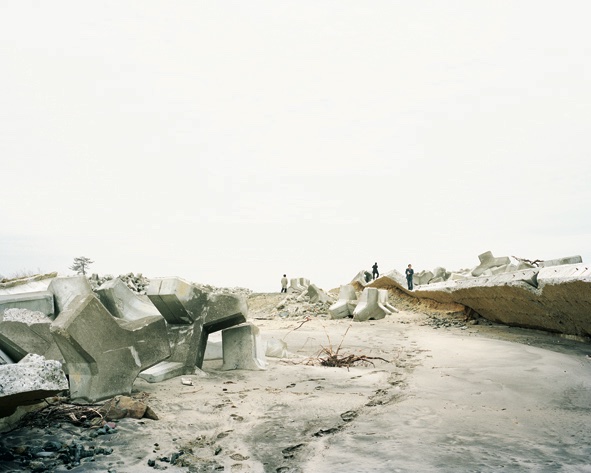
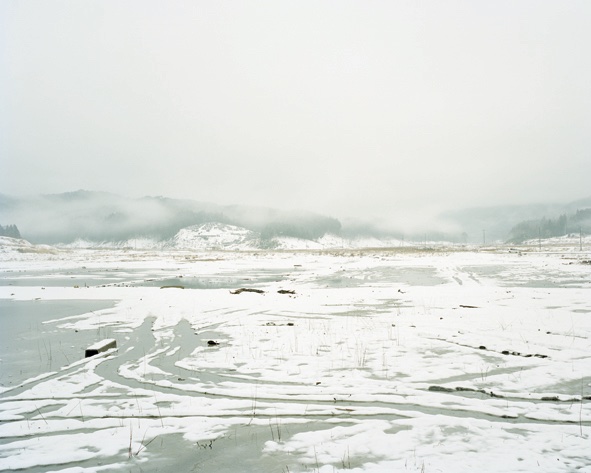
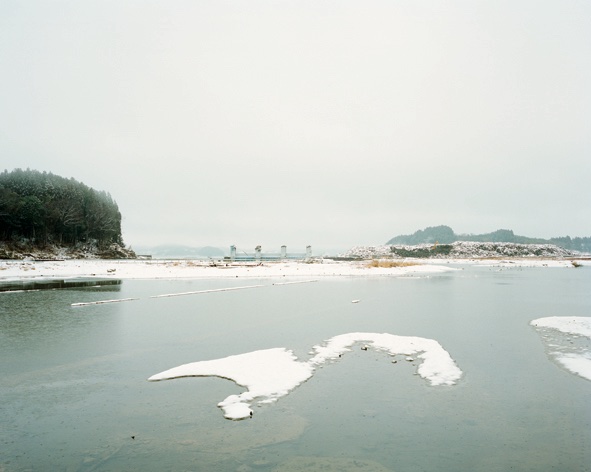
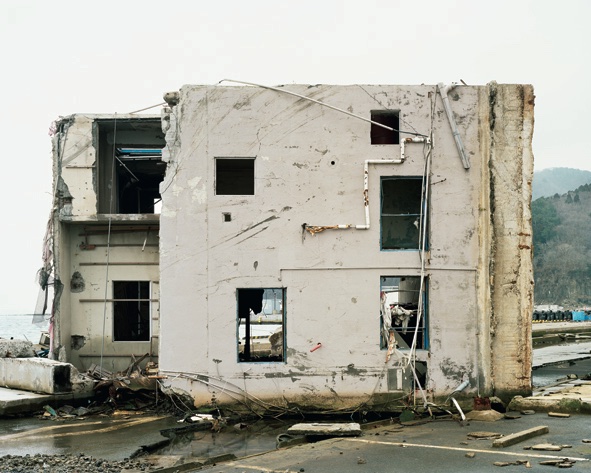
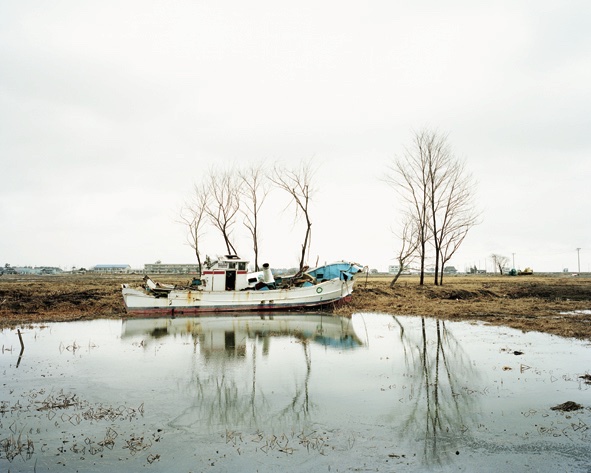
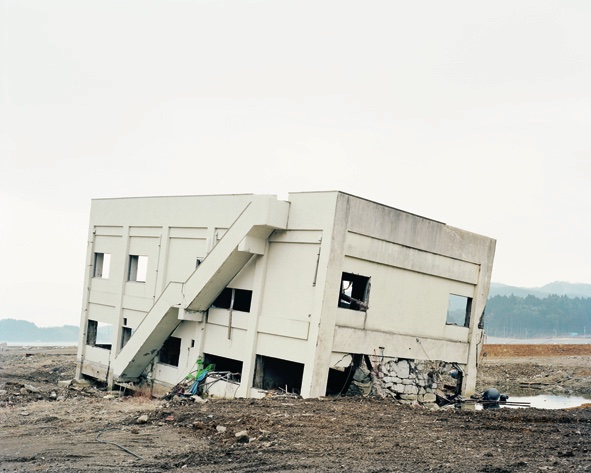
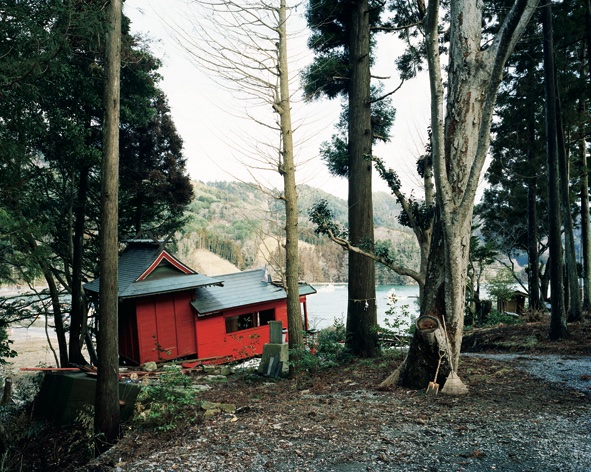
A post-apocalyptic mood settles over the picturesque snow-covered landscapes, which evoke the beauty of Japanese woodcuts. Time stands still. The landscape seems frozen. A thin layer of snow covers the traces of the catastrophe, which are now only latently visible. Plains swept bare, where coastal towns once stood, remain in a moment of paralysis. Even a year after the tsunami, the Tōhoku region still seems paralysed.
Schink’s visual language of the sublime, drawing on strategies of Romanticism, combines the horror of the natural disaster with an aesthetic composition into a tense expression of the sublime. The narrative power of the overwhelming panoramic landscapes is heightened by a mixed feeling of fascination and threat. The eerie calm after the storm seems deceptive, as if the sea could rise up again at any moment.
The surviving ruins of houses, indebted to the topographical style of Bernd and Hilla Becher, placed frontally, diagonally or sideways in the centre of the picture under an even, pale light, enchant through their sculptural beauty. In many of his previous series, Hans-Christian Schink has explored the contrast between nature and culture, for example in “Verkehrsprojekte Deutsche Einheit” or the series “LA”. With “Tōhoku”, Schink makes an about-turn and shows that it can also be the other way round: nature has taken back something that humans tried to appropriate.
“In Japan the striving to control nature is more pronounced than in Western societies. At the same time there is a much greater acceptance that nature is stronger and cannot be defeated by humans.” Schink’s sober pictures express how Japan has learned to live with natural disasters.
The exhibition was realised in cooperation with the Alfred Ehrhardt Stiftung, Berlin.
Text: Christiane Stahl (Alfred Ehrhardt Stiftung)