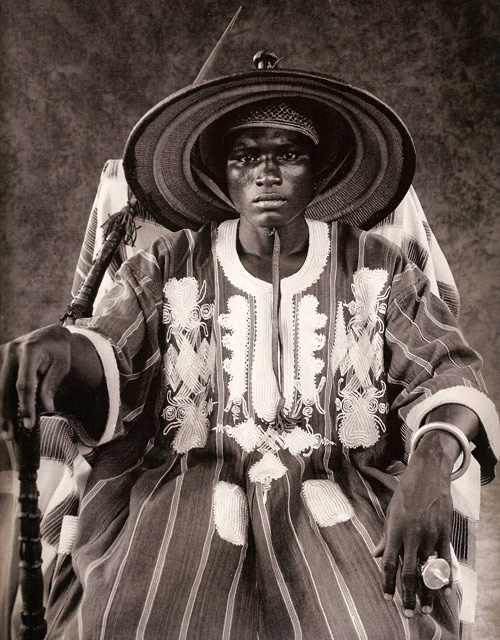
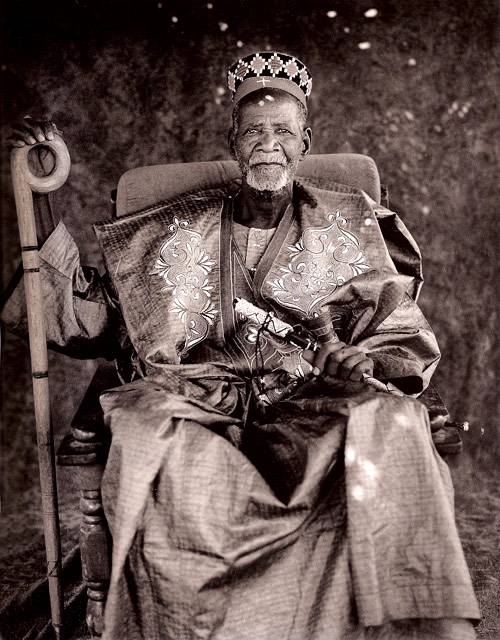
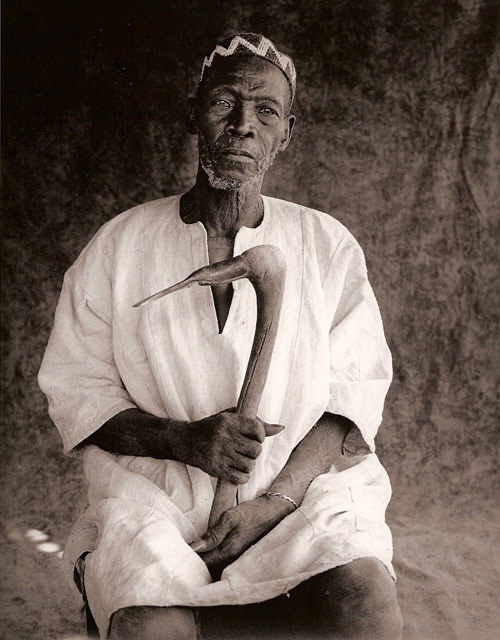
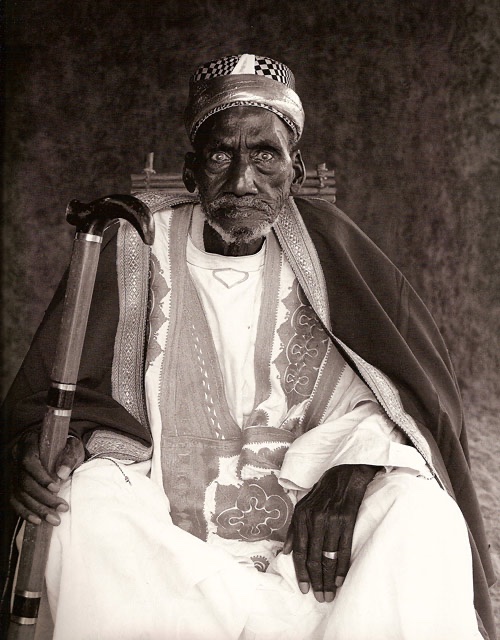
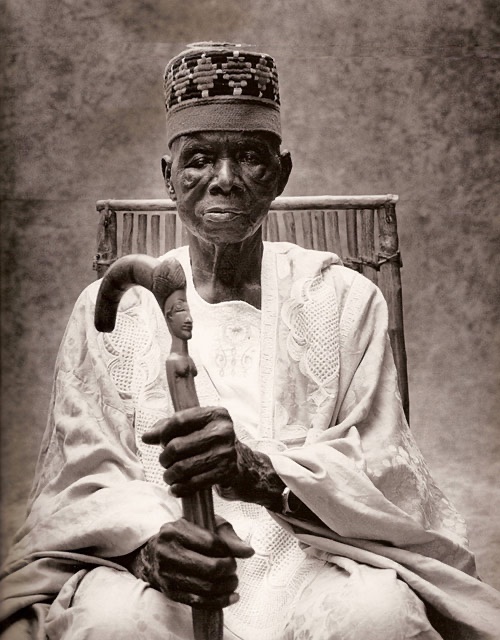
In 2004 the Belgian photographer Jean-Dominique Burton (b. 1952) travelled twice to the West African state of Burkina Faso to make portraits of the Naabas. Naaba is the traditional term for the village chief, who is usually the eldest of the village or clan. The Naaba can be the head of a village or of an entire tribe. His court includes a fixed number of advisers (council of elders), who also bear the title Naaba in their names.
The population of Burkina Faso (formerly Haute Volta/Upper Volta) comprises some 60 different ethnic groups, dominated by the most populous, the Mossi, with the Mogho Naba as their emperor. The traditional “chefferie” has survived the French colonial period. The relationship between the village chiefs and the state administration, however, is purely informal. Although the Naabas enjoy great respect among the population, they are represented in the parliament of Burkina Faso by only one spokesperson.
Burton’s portrait photography relies on consistent concentration on the person depicted. All the Naabas are shown frontally against a grey background. The insignia of their power are limited to the wooden throne, the typical round headdress, the staff and traditional West African ceremonial dress. With this strict composition – a deliberate quotation of Nadar’s photographic paradigms and of early French colonial photography – Burton achieves memorable portraits of the dignity and power of the Naabas, which in some cases also make one think of the possibility of the abuse of this very political power.
53 black-and-white photographs in the format 44.5 × 55.5 cm are being shown together for the first time in the Cologne exhibition.