Willy Hermann Robert Römer was the fourth – and second-youngest – child of the Berlin master tailor Jacob Römer (born 12 May 1843) and his second wife Anna Helene Alvine Römer, née Heinz. The couple had three sons and two daughters, all born in the decade between 1881 and 1891. The father, Jacob Römer, had been married once before and had a son from this first marriage. As a Catholic he could not marry in church a second time, which is why there is no record of the wedding in the parish registers. The family then lived in Berlin at Lothringer Straße 57 – later Wilhelm-Pieck-Straße, now once again called Torstraße –, not far from Rosenthaler Platz, in other words on a street where, a hundred years earlier, the city had ended at the northern boundary of the Baroque extension. North of it, breweries and factories had since settled, bringing workers’ housing in their wake; south of it, the inner city as far as Hackescher Markt and the newly built viaduct of the Stadtbahn was characterised by flats, shops and smaller craft businesses.
On 1 April 1903 Willy Römer began an apprenticeship with the Berliner Illustrations-Gesellschaft. This was the first company in Berlin devoted exclusively to producing and distributing press photographs. It had been founded in 1900 by three former school friends: Karl Ferdinand Delius, Martin Gordan and Heinrich Sanden. The “first guard” of Berlin press photographers worked here at the time, some of whom later set up on their own. Heinrich Sanden was the commercial director; he had previously worked at a bank. Karl Delius, who had studied for two semesters at the Berlin Academy of Arts before the turn of the century, was the artistic director and Willy Römer’s master. Martin Gordan, son of a wealthy shoe merchant, wanted to marry and had to prove to his parents-in-law that he had a “livelihood” of his own. He probably provided the start-up capital. Thus the Berliner Illustrations-Gesellschaft came into being at Königgrätzer Straße 62, today Stresemannstraße, near the Anhalter Bahnhof.
Willy Römer received a monthly wage of 20 Reichsmarks in his first year of apprenticeship, 25 in the second and 30 in the third. From 15 March 1908 to 21 September 1909 and from 1 August 1910 to 31 July 1912, three and a half years in all, he worked for his former master Karl Delius (by then: Charles Delius) in Paris. Walter Bernstein, later Willy Römer’s business partner, was also employed there from 2 August 1908 to 1 August 1914. Both probably learned as much French in these years as they needed for everyday dealings.
From 15 August 1912 to 31 March 1913 Römer worked for the firm Internationale Illustrations-Co. in Berlin, from 1 June to 30 October 1914 for the press photo agency Robert Sennecke, and from 1 November 1914 to 10 March 1915 again for the Berliner Illustrations-Gesellschaft. Like almost all press photographers of his generation, Willy Römer thus learned photography “from the ground up” in practice.
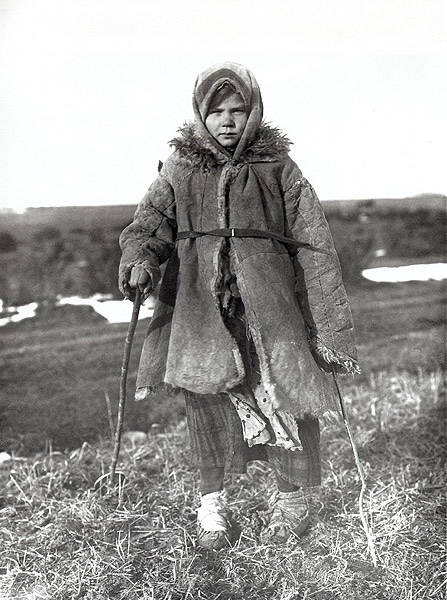
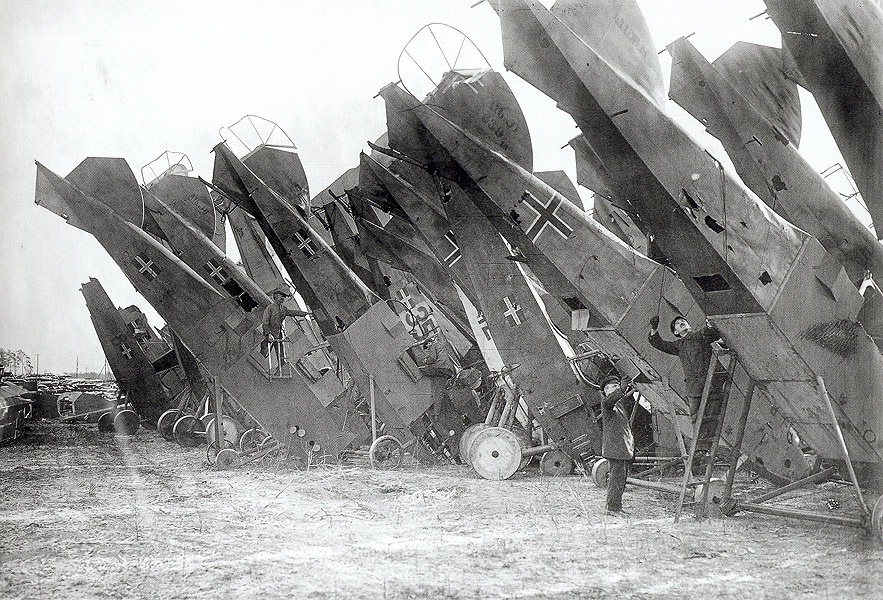
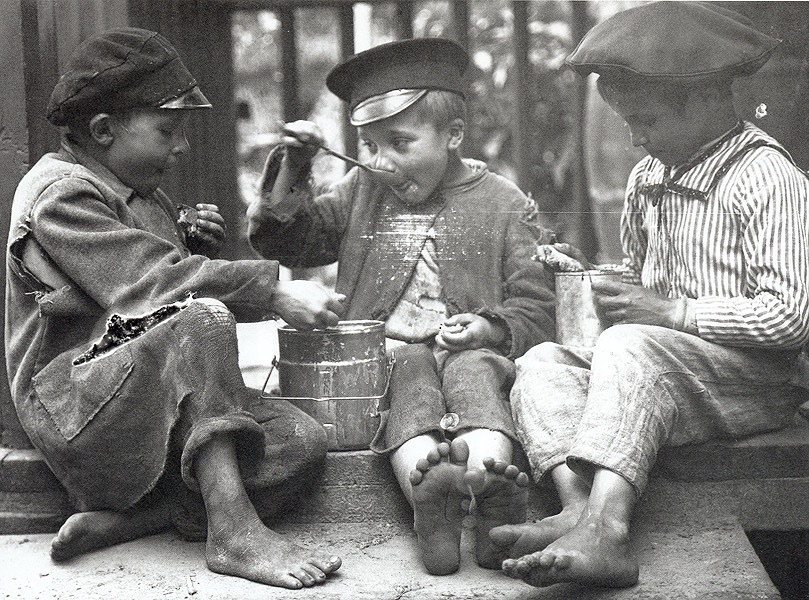
From 12 March 1915 to 24 November 1918 Willy Römer was a soldier, deployed first in Russia and Poland, later in Flanders, as an ordinary infantryman, not as a war photographer. Nevertheless, he had taken his heavy 13 × 18 camera with him into the field. When the front came to a standstill in Russian Poland/Belarus in spring 1916, he left the troops from time to time to photograph the life of poor peasants in the countryside. He also documented market scenes in Lida (Belarus) and Suwałki (Russian Poland, today Poland) and the street life of the poorer Jewish population around Warsaw (which at the time also belonged to Russian Poland). In all, some 100 photographs of small-town Jewish street life around Warsaw and around 250 from rural Belarus have survived, many of them only as negatives without prints.
Having previously got to know and photograph the metropolis of Paris, Römer now found himself in a completely different, much poorer, probably also exotic world. Experiences of contrast for a young man who had come to Paris at 21 and now, at 28, to the Polish-Russian border region, both geographically and mentally equally far from the Berlin craftsmen’s milieu in which he had grown up. He approached this foreign world with empathy and interest. He was probably able to communicate with the people somehow; otherwise they would hardly have let him into their homes and watch them at work. He observed their culture and way of life intensively. In any case, he perceived them as a culture and took them seriously; their otherness made them seem worthy of a picture to him. It is remarkable that these photographs are not war photos. It is not comrades or superiors, military quarters or fortifications, bunkers or battlefields, destruction or wounds that Willy Römer photographs, but the life of ordinary people behind the front, away from the fighting. It is as if Willy Römer used the fact that the war had brought him to a distant, foreign world in order to make the best of the situation for himself: namely, pictures. When, long after the Second World War, he sorted his negatives and made new 18 × 24 cm prints of the most interesting ones, he created a separate folder for these “Russia” photographs, which he liked to show to his visitors. As far as we know, these pictures have never been published.
Willy Römer later travelled a great deal within the Central European cultural sphere. The small-town Jewish and peasant culture of Russian Poland in 1916 was to remain the most foreign he encountered, camera in hand, in his long life.
When Willy Römer returned to Berlin at the end of November 1918, revolution was under way. With his 13 × 18 Nettel focal-plane plate camera he went out into the streets and recorded what seemed significant to him: demonstrations, fighting, barricades, sentries, medics, and finally the traces of the fighting: destroyed houses, squares and streets. He documented the events of December 1918 with the fighting around the Berlin Palace, the January fighting of 1919, later called the “Spartacist uprising” by the revolution’s opponents, and the bloody civil war of March 1919. In the sparse winter light he achieved some masterly pictures.
In several pictures Römer photographed Karl Liebknecht during his last public speeches; later he also documented the funerals of Karl Liebknecht and Rosa Luxemburg. In the special issue “Berliner Sturmtage” published by the Berliner Illustrirte Zeitung at the end of January 1919, Willy Römer was the most published photographer, with 16 photos (credited there with the name of his firm, Photothek). In all, during the weeks of revolution between December 1918 and March 1919, Willy Römer took more than 200 photographs, some of which have since become “icons” of the revolution – though without the photographer’s name becoming known.
During the Kapp Putsch of 1920 he photographed troop movements in Berlin, later the occupation of the Rhineland and the withdrawal of Allied troops from the Ruhr. It is remarkable that the French occupation soldiers do not appear unsympathetic in his photos – which may be due to the fact that he might have called out something to them in French while taking the picture.
In 1918 Willy Römer took over the firm Photothek at Belle-Alliance-Straße 82, together with the associated flat, from his colleague Robert Sennecke – the building still stands; its address today is Mehringdamm 58. Around the same time he married Charlotte Michel, eight years his junior, born on 24 February 1896, who had grown up as an orphan with an aunt and therefore brought no dowry into the marriage. While Willy Römer was outgoing, open-minded and sociable, Charlotte Römer was considered quiet and reserved. In 1922 their only child, their daughter Ursula Römer, was born.
The firm Photothek had first been entered in the Berlin commercial register on 15 January 1914 under the name Photothek Willy Michaelis and transferred to Robert Sennecke on 31 July 1918. Sennecke kept his own firm at Hallesches Ufer 9, which continued until his death at the end of the 1930s. Around 1918/19 Willy Michaelis had a postcard publishing house that, among other things, sold the revolutionary motifs photographed by Willy Römer as postcards.
The Photothek and Walter Bernstein
On 11 February 1920 Walter Bernstein joined the firm as commercial director and text editor; on 31 March 1920 it was entered in the commercial register under the name Photothek Römer & Bernstein. Willy Römer and Walter Bernstein knew each other from their time together with their former boss and master Karl Delius in Paris. They may already have developed the idea of founding a joint firm one day back then. Walter Bernstein, born in Berlin on 26 January 1890, was two years younger than Willy Römer; he had worked from 2 August 1908 to 1 August 1914 at the Agence de Reportage Photographique Charles Delius at 31 Avenue Trudaine in Paris, and from 5 August 1914 to 17 July 1917 he had been “active at the Berliner Illustrationsgesellschaft as head of bookkeeping, the cash office and later the editorial department”. The families were friends; in some photos from the mid-1920s the two little girls Hilde Bernstein and Uschi Römer can be seen dancing to radio or gramophone music. In the prosperous years the Römers and Bernsteins often spent four to six weeks of summer holiday together in Ahlbeck on the Baltic. New Year’s Eve was also celebrated together with other friends or relatives, as photos also show.
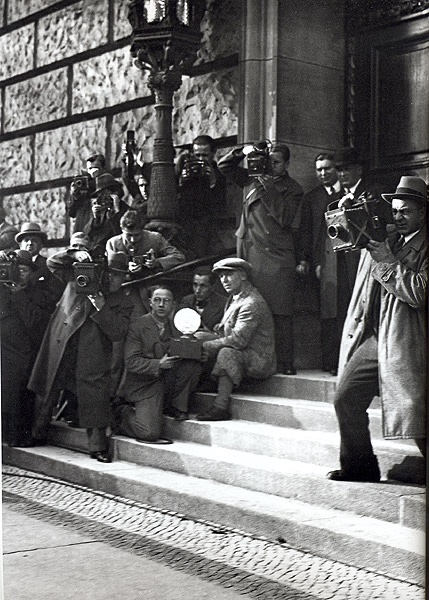
Willy Römer and Walter Bernstein developed their joint firm into a successful business. At times they employed up to four other photographers, so-called operators – Walter Stiehr, Ernst Gränert, Germain Haine and Walter Obschonka – as well as secretaries, lab technicians and messenger boys, so that in the best times some ten to twelve people worked for the firm. In less good times, or when particularly urgent jobs piled up, the wives of the two bosses probably had to lend a hand. Since the archive prints were usually stamped and the stamp had an “operator” column in which the photographer’s name was entered, it is usually still possible to establish which pictures were taken by whom among the photos that survive today.
In those days copyright was not taken as seriously as it is today. Photographers employed by a press photo firm usually had no camera of their own. The relatively heavy and expensive apparatus belonged to the firm, and of course the glass negatives and other materials were also supplied by the firm. The results of the work, the exposed negatives as well as the prints, then belonged with all rights of exploitation to the owners of the firm; the individual photographer received only a monthly wage. That had been Willy Römer’s experience as long as he was employed by Karl Delius and others, and after 1924 he naturally did the same with his own employees. Some of their pictures are still in the surviving Photothek archive today. It also happened that, at an event that a colleague employed by another agency could not attend, a photographer would take two pictures of the same situation and give one of them to his colleague, who would return the favour with a comparable service at the next opportunity.
Willy Römer himself travelled a great deal in Europe. In the 1920s he was in Paris again, as well as in Antwerp, Amsterdam, Alkmaar and Copenhagen. From many German cities there are pictures of market and street scenes, prominent buildings, museums and their collections, occasionally also city views. Willy Römer took particularly impressive pictures in and around Danzig. Where it suited, a family holiday was perhaps combined with a photo assignment, for example on excursions to the Spreewald, or when his wife and daughter were allowed to act as extras to demonstrate the girth of the thousand-year-old oaks of Ivenack in Mecklenburg. The photos from rural areas show his interest in folkloric subjects such as costumes, customs, folk art, crafts and historic architecture.
The economic heyday of the Photothek was probably the decade from 1919 to 1929; after the world economic crisis of 1929/30 and under the increasing pressure of Anglo-American competition, survival became more difficult.
The Nazi era, closure of the firm, Second World War
In the very first months of National Socialist rule, the Photothek was denounced as a “Jewish firm” because Walter Bernstein, one of the two owners, was of Jewish descent. Although he was not religious and described himself as a “dissident”, he had a Jewish father. That was enough to forbid the entire German press from obtaining even a single press picture from the Photothek. On 1 April 1933 SA men took up position in front of the building at Belle-Alliance-Straße 82. When Walter Bernstein protested that they wanted to prevent him from entering his firm, they beat him. From one day to the next the Photothek was deprived of its business; its work was taken over by other press photo firms that had no Jewish co-owner. In this respect the Photothek shares the fate of a whole series of Berlin press photo agencies whose owners, partners or managers were likewise of Jewish origin. These include Presse-Photo GmbH (Schiffrin and Feinschreiber), the Deutsche Presse-Photo-Zentrale (Hans and Fritz Basch), Dephot (Simon Guttmann), Weltrundschau (Rudolf Birnbach), Mauritius (Ernst Mayer) and Yva (Else Neuländer-Simon). Some of these people were able to save their lives by emigrating; others, such as Dr. Erich Salomon and Else Neuländer-Simon, were murdered in concentration camps.
The Photothek had to file for bankruptcy, and all employees were dismissed in spring 1933. Large parts of the inventory and of the Römer family’s private property were seized, including the oak study of which they had been so proud. On 30 September 1935 the firm was finally closed, and on 10 March 1937 its dissolution was entered in the commercial register. Willy Römer tried to find work as an individual photographer and asked former colleagues and competitors for assignments. The Römer family had to give up the business premises and the large flat on the piano nobile of Belle-Alliance-Straße 82 and moved into a smaller flat at Körtestraße 2, two kilometres further east, near Südstern. Since Willy Römer never owned a car, being close to an underground station was probably important to him. The entire stock of glass negatives, the picture archive of the Photothek, was divided. Willy Römer received his own pictures and the greater part of the archive, Walter Bernstein possibly the small-format films and thus presumably the more recent pictures by the other photographers. There is said to have been a dispute over the separation, because the Römer family, whose flat was physically connected with the Photothek, had to bear the financial burden of the bankruptcy alone. The Bernstein family lived in Tempelhof and was able to keep their flat. Walter Bernstein wrote a letter to Adolf Hitler, addressing him as “Excellency”. He pointed out that he had fought for Germany in the First World War and was married to an “Aryan” woman. He asked that the ban on practising his profession be lifted and that he be allowed to take a job as a clerk in the press photo business. The letter was never answered. Walter Bernstein was diabetic; the turmoil of these years probably further damaged his health. He died on 22 January 1938. His wife and daughter survived the Hitler era unharmed.
Until his death Walter Bernstein worked without a contract and secretly in a back room of the Berlin press photo agency Braemer & Güll, as did his wife until the firm was closed by the authorities in October 1944. Wilhelm Braemer (1887–1970), one of the two owners, was an old-school Berlin press photographer and well acquainted with Römer and Bernstein. The premises of PBZ Braemer & Güll at Friedrichstraße 214 were destroyed by bombs in February 1945, and the Photothek picture holdings taken over by Walter Bernstein and stored there were burnt.
Willy Römer had moved his share to Körtestraße, where the contact prints almost completely and just under 90 per cent of the glass negatives survived the war. The building in which the Römers lived was not bombed, so in 1943/44 they were able to take in a friendly family for several weeks who had been bombed out in another part of the city. How Willy Römer earned his money in the years 1937 to 1941 has not yet been established. In January 1942 he was conscripted for war service in Posen and worked there until the end of 1944 as a photographer for the Ostdeutscher Beobachter, the official organ of the NSDAP in the Reichsgau Wartheland. Why he took this job at a party newspaper, although it was this very party that had destroyed his livelihood nine years earlier, is not known. In Posen – probably not at his own request but at the behest of the editorial office – he was admitted to the NSDAP on 1 April 1942. Since, as the only permanently employed older photographer, he was presumably regarded as “picture editor”, it was probably impossible for him not to be in the party. The pictures published under his name in the Ostdeutscher Beobachter show how listlessly he carried out the party’s assignment, delivering to his superiors exactly what they wanted to see: uniforms, flags, Nazi symbols, statuesque rituals. These pictures have no view of their own, nothing personal, nothing narrative, nothing humanly touching as 26 years earlier in the easternmost – then Russian – region of Poland, in whose westernmost – now again German – region he was now working.
At the beginning of 1945 Willy Römer was back in Berlin and had to witness the destruction of the city – especially that of the newspaper district on 3 February 1945. Like so many others, he was probably called up to the Volkssturm or air-raid protection in the last days of the war.
The post-war period
After the end of the war Willy Römer photographed the city’s shot-up prominent buildings, the Reichstag, the Brandenburg Gate, the Palace and so on, probably with the intention of selling them as real-photo postcards to occupation soldiers. Evidently he had managed to save his cameras through the end of the war and the first months of the occupation. He then tried to keep his head above water with small commissions from Berlin district administrations on subjects such as rubble clearance, reconstruction, topping-out ceremonies and so on. Most of the pictures from this time are – unlike those of Fritz Eschen and Friedrich Seidenstücker, for example – as bleak as the city of Berlin may have seemed to him at the time.
In 1947 Willy Römer turned 60. Of what he had built up by his 45th birthday on 31 December 1932, nothing remained except the picture archive, in which hardly anyone was now interested. His home city and especially his former sphere of activity, the newspaper district, had been destroyed. When Willy Römer had passed the age of 65 and there was no improvement in sight in the economic situation for him and his wife, the two had to move once more: from the larger, brighter flat at Körtestraße 2 into a small, dark rear-courtyard flat at Mommsenstraße 23 in Charlottenburg. Willy Römer did not really want to leave Körtestraße; the realism of his “two women” will have forced him to move. At least the new flat on the raised ground floor offered a view at the back of a few square metres of green. What was decisive, however, was that it was smaller and therefore cheaper. Part of the picture archive now had to be moved to the cellar, from which Willy Römer carried the glass plates he wanted to work on upstairs in a tin briquette carrier. He set up a very cramped darkroom in the pantry. In the last 25 years of his life, until his death on 26 October 1979, Willy Römer seems to have been occupied mainly with caring for and processing his archive. He cleaned the glass plates, made new 18 × 24 cm prints and wrote detailed captions for them. In this way, over the years, he created 33 folders with 35 to 75 pictures each, a body of more than 2,000 pictures in all, which he liked to show when someone interested visited him.
The end of his life
Apart from a few insignificant articles published on his 80th birthday, Willy Römer was never honoured during his lifetime in the way his work deserved. In this respect he shared the fate of other outstanding press photographers of his generation such as Walter Gircke, Alfred Groß, Otto Haeckel, Willi Ruge and Robert Sennecke. Only Philipp Kester has found an expert biographer in Dirk Halfbrodt. When he had passed 90, Willy Römer, who never complained of any infirmity, did after all fall ill. The death notice, signed only by his wife, daughter and son-in-law, states that he died in Berlin “after a long illness” in his 92nd year on 26 October 1979.
The estate
After Willy Römer’s death his wife and daughter first sold the coin and stamp collections. An antiquarian bookseller took the more valuable books and acquired some autographs of high-ranking figures whom Willy Römer had portrayed. In spring 1980 the Berlin advertising photographer and collector of photographica Werner Umstätter bought the cameras: a Leica, a 9 × 12 Goerz-Anschütz, a Klapp-Primar and a Nettel-Zeiss-Ikon, all with heavy signs of use. Over the years Umstätter had built up an extensive collection of cameras, which he then sold to one of the world’s largest photo retailers in Japan, who was planning a private photo museum.
Today, with the exception of one that remained in Berlin, Willy Römer’s cameras are part of this collection in the Yodobashi Museum in Tokyo. Charlotte and Ursula Römer tried for almost two years to find a buyer for the photo archive. They offered it to the Ullstein picture service, the Federal Press Office, the Bertelsmann encyclopaedia publisher and other potential buyers: all in vain. Finally they placed an advertisement in issue 5/1981 of the trade journal Journalist with the text: “Important picture archive for sale. Great historical value. Over 60,000 photos and 7,000 portraits of German history 1906–1936. All events recorded by the photojournalist.” Diethart Kerbs read this advertisement. On behalf of the descendants he then tried once more to place the archive with a public institution of the State of Berlin: the State Archive, the Berlinische Galerie, the Landesbildstelle and so on – all refused to take on this important historical picture archive. After several months of fruitless efforts, Diethart Kerbs finally acquired the archive himself with great personal effort. The considerable work of carefully preserving and processing the archive was borne by him for many years. In the exhibition of Willy Römer’s photographs at the Deutsches Historisches Museum in Berlin from 27 October 2004 to 24 February 2005, selected parts of this archive material could be shown, to great public interest, as surviving originals or as exhibition enlargements from existing negatives.
For the exhibition “Auf den Straßen von Berlin. Der Fotograf Willy Römer, 1887–1979”, Diethart Kerbs edited an extensive catalogue of the same title (DruckVerlag Kettler, ISBN 3-937390-31-6). The information on Willy Römer summarised in this text is taken entirely from this catalogue. The exhibition “Willy Römer – Alltag und Epoche 1918–1945”, shown at the Forum für Fotografie in Cologne from 9 April to 12 June 2005, includes, alongside a selection of Berlin photographs, important and never previously shown photographs by Willy Römer from Cologne, the Rhineland and the Ruhr. The pictures were mostly taken in the 1920s and 1930s, when Willy Römer travelled to France, Holland and Denmark as well as many German regions. The photographs show how metropolitan Cologne was in this period and how, at the same time, surprising motifs presented themselves to Willy Römer here, such as a southern-looking pigeon market, child labour on laundry ships, life with the Allied occupation soldiers and finally documents of the rise of National Socialism.
My express thanks go to Diethart Kerbs, the guardian of Willy Römer’s picture archive. The curation and preparation of this exhibition were substantially supported by Stefanie Ketzscher, who, together with Diethart Kerbs and Andreas Hallen, had already been involved in conceiving the Berlin exhibition. Her detailed knowledge of Willy Römer’s picture archive made it possible to show the material on Cologne and the Rhineland presented here.